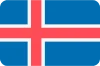


Are you a fan of quirky alphabets and ancient languages like the ones you hear in the Vikings series? If you answered yes, you’re going to love learning Icelandic.
Fun fact: Icelandic is one of the few Nordic languages that has barely changed since the Viking Age. Hence, mastering this language could, in theory, allow you to read a thousand-year-old saga without Google Translate.
But before you start learning Viking-inspired phrases, you’ve got to nail the Icelandic language basics first, which you’ll explore in a fun way below.

Icelandic Language Basics
When you talk about Icelandic language basics, it does not necessarily mean going back to its history (though it’s important!). What “basics” essentially refer to are the foundational building blocks that every beginner language learner should know before they study the language more deeply.
You may think the alphabet, but it is only part of the equation. You won’t fully understand it if you don’t nail Icelandic’s everyday vocabulary (greetings, polite expressions), sentence structures, and proper pronunciation for its iconic letters (Þ, ð, Æ, Ö).
Jumping straight to the greetings and phrases might seem more logical to you, but mastering the Icelandic language basics sets you up for a more enriching and enjoyable learning journey.
Icelandic Vocabulary
When you start learning Icelandic language basics, you start with the simple words and phrases you’ll hear in everyday speech. The best place to start is learning how to say hello in Icelandic, along with other greetings and phrases commonly used in conversations.
| English | Icelandic | Pronunciation | Context |
|---|---|---|---|
| Hello | Halló | HAH-loh | Basic, friendly greeting |
| Good day | Góðan daginn | GOTH-an DAH-in | Polite, daytime greeting |
| Good morning | Góðan morgun | GOTH-an MOR-gun | Morning greeting |
| Good evening | Góða kvöldið | GO-tha KVOHL-dith | Evening greeting |
| Goodbye | Bless | BLESS | Informal farewell |
| Please | Vinsamlegast | VIN-sam-LE-gast | Polite word for requesting |
| Thank you | Takk | TAKK | To show gratitude |
| Yes | Já | YOW | Simple affirmative |
| No | Nei | NEY | Simple negative |
| Excuse me/Sorry | Afsakið | AF-sa-kith | To get attention/apologize |
| How are you? | Hvað segirðu gott? | KVAHT SEH-girthu GOT | Common way of asking about someone’s well-being |
| See you | Sjáumst | SHAH-oomst | Casual goodbye |
| What’s your name? | SHAH-oomst | KVAHT HAY-tir thu | To ask one’s name politely |
| My name is… | Ég heiti … | YEG HAY-ti … | To introduce yourself |
| Where is…? | Hvar er …? | KVAR air … | For asking directions |
These may be a few words for now, but mastering them will quickly leave a good impression on the locals of the efforts you’ve made to speak their language.
Fun Fact: Icelanders love saying Takk fyrir! (Thanks for that!), instead of just Takk!, as it’s more polite and warmer in tone.
Icelandic Grammar
Most non-Icelanders would find the Icelandic language basics intimidating. But if you know its grammar concepts, it’s not as complicated as it seems. There are four basic Icelandic grammar rules you should know:
1. Three Genders
Like English, the Icelandic language has three genders for every noun: masculine, feminine, or neuter. You must be able to establish this first, since the noun’s gender can affect how the adjectives or articles change to match the noun.
Quick Grammar Tip: To know what gender a particular noun has, look at its ending:
- Words ending in -ur = Masculine (Example: hestur – horse)
- Words ending in -a = Feminine (Example: kona – woman)
- Words ending in -ið or -t = Neuter (Example barn – child)
2. Changing Nouns
Nouns in Icelandic change form depending on the job they’re doing in the sentence (subject or object), and their number (one or more than one). There are four cases (declensions) in Icelandic:
Nominative Case: This is the default (base) form of Icelandic nouns. It is used for the person or thing doing the action – the “doer” (subject). Being the base form, nouns in Icelandic dictionaries are listed in their nominative case.
| English | Icelandic | Noun Change |
|---|---|---|
| The cat eats the fish. | Kötturinn étur fiskinn. | köttur (cat) → kötturinn (the cat) |
Accusative Case: This is used for the person or thing affected by the action, the “whom” or “what” something is done to – the “receiver” (direct object). In many masculine nouns, the ending changes from -ur to -inn or -innn (like köttur → köttinn. Feminine nouns like kona (woman) often stay in the same form or have a slight shift (konu).
| English | Icelandic | Noun Change |
|---|---|---|
| I see the cat. | Ég sé köttinn. | köttur (cat) → köttinn (the cat is the one being seen) |
Dative Case: This case is used to show to whom or for whom the action is done – the “receiver” of something (indirect object). Here you’ll see masculine nouns end in -i or -um, while feminine nouns like kona (woman) become konu.
| English | Icelandic | Noun Change |
|---|---|---|
| I give the cat a fish. | Ég gef kettinum fisk. | kattur → kettinum |
Genitive case: This Icelandic case shows association or ownership, like how English adds ‘s or “of” – the owner (possessive form). Nouns in the genitive case usually end in -ar, -s, or -ins, depending on their gender.
| English | Icelandic | Noun Change |
|---|---|---|
| The cat’s house is big. | Húsið kattarins er stórt. | kattur → kattarins |
3. Sentence Order
Icelandic is similar to English in that it follows the SVO (subject-verb-object) word order.
| English | Icelandic | Explanation |
|---|---|---|
| I eat apples. | Ég borða epli. | Ég (I) borða (eat)epli (apples) |
But even if they’re similar, Icelandic can move the words (subject, object, or time phrase) around for emphasis. The verb usually stays in the second position.
| English | Icelandic | Explanation |
|---|---|---|
| Yesterday, I ate apples. | Í gær borðaði ég epli. | Even if the sentence starts with “yesterday,” the verb (borðaði) still comes second. |
| Apples, I do not eat! | Epli borða ég ekki! | Dramatically declaring your dislike of apples |
4. Verb Order
Most verbs in Icelandic, except for a few irregular (change in unexpected ways) ones, follow predictable patterns. Verbs are grouped according to how they change (conjugate) depending on the tense (present, past, future, etc.) and the subject (I, you, he/she, we, etc.).
Regular verbs: A change in the verb ending denotes a change in the order.
Example: að tala = to speak
| English | Icelandic |
|---|---|
| I speak | Ég tala |
| You (singular) speak | Þú talar |
| You (plural) speak | Þið talið |
| He/She speaks | Hann/Hún talar |
| We speak | Við tölum |
| They speak | Þeir/Þær/Þau tala |
If you notice, the ending changes depending on who is speaking. The stem tala- stays the same, making the pattern easier to remember.
In the past tense, you use -ði.
| English | Icelandic |
|---|---|
| I spoke | Ég talaði |
| We spoke | Við töluðum |
Irregular verbs: These Icelandic verbs change their stems or endings.
Example: að vera = to be
| English | Icelandic |
|---|---|
| I am | Ég er |
| You (singular) are | Þú ert |
| You (plural) are | Þið eruð |
| He/She is | Hann/Hún er |
| We are | Við erum |
| They are | Þeir/Þær/Þau eru |
As you can notice, vera changes a lot (er, ert, erum, eruð, eru). But as it is used often, it will become one of the first verbs you’ll memorize automatically.
In the past tense:
| English | Icelandic |
|---|---|
| I was | Ég var |
| I were | Við vorum |
Another useful verb that is semi-regular is að hafa (to have). You’ll notice some vowel changes within the word, which commonly happens in Icelandic verbs, and it gets easier to spot the more you see it.
| English | Icelandic |
|---|---|
| I have | Ég hef |
| You (singular form) have | Þú hefur |
| You (plural) have | Þið hafið |
| He/She has | Hann/Hún hefur |
| We have | Við höfum |
| They have | Þeir/Þær/Þau hafa |
But if all these are confusing you, you can start by memorizing the most common Icelandic verbs:
- að vera (to be)
- að hafa (to have)
- að fara (to go)
- að koma (to come)
- að gera (to do/make)
Once you learn how these verbs behave, patterns in new verbs will be easier to recognize.
Unique Icelandic Pronunciation
Like its grammar, pronunciation in the Icelandic language can be tricky at first. But pronunciation rules are consistent in this language. Keep the following things in mind so you’ll be able to speak like a local soon:
Stress Is Always On The First Syllable
Icelandic has a simple way of putting stress on the syllables of its words. Unlike in English, where the stress can jump all over the place, the first syllable always gets the stress, no matter how long it is.
| English | Icelandic | Pronunciation |
|---|---|---|
| Iceland | Ísland | EE-sland |
| Fun | Gaman | GAH-man |
| Teacher | Kennari | KEN-na-ri |
Pronounce Double Consonants Separately
Double letters in Icelandic are common, but they are there not just for decor. They hold or bounce the sound a bit longer. When you see these, say them slowly and clearly, like you’re giving the second letter a tiny echo.
| English | Icelandic | Pronunciation |
|---|---|---|
| To call | kalla | KAH-tlah |
| Mom | mamma | MAH-mah |
Vowels Can Change A Word’s Meaning
Vowels are everything in Icelandic. The presence of an accent mark can flip that word’s meaning, so you need to pay attention. But as they’re pure and steady, repeat them slowly after listening to native speakers say them.
| English | Icelandic | Pronunciation |
|---|---|---|
| Sun | sól | sohl |
| Soul | sál | sahl |
| To close | loka | LO-ka |
| To finish | lúka | LOO-ka |
Icelandic “Þ” and “Д
The key to their proper pronunciation is to stick your tongue gently between your teeth and just let the air flow, similar to when you’re saying “think” or “this.”
| English Equivalent | Icelandic Letter | Example |
|---|---|---|
| voiceless “th” | Þ / þ | Þakka þér (thank you) |
| voiced “th” | Ð / ð | Þú ert að lesa (you are reading) |

Keep It Musical
Regardless of other pronunciation tips and other Icelandic language basics you’ll need to master, Icelandic has a generally melodic, flowing rhythm to it. Almost like gentle waves. To achieve this, you have to continually listen to the locals and practice short phrases with real audio (apps like Ling are perfect for this).
Then repeat out loud until you can easily “sing” them back.
How Do You Say Hello In Icelandic?
Halló! is the most common Icelandic greeting for hello. You can also say Góðan daginn, which means “Good day.” To sound more casual, say Bless!
But to sound more like a local, add Hvernig hefur þú það?, which means “How are you?”

Basic Icelandic Greetings And Phrases
With all the Icelandic language basics you’ve learned, here are a few of the most common words and phrases you’ll hear daily. Practice what you’ve learned, even when you learn Icelandic online, and you’ll sound like a local in no time.
| English | Icelandic | Pronunciation |
|---|---|---|
| Hello | Halló | HAH-loh |
| Good day | Góðan daginn | GOTH-an DAH-in |
| Good morning | Góðan morgun | GOTH-an MOR-gun |
| Good evening | Góða kvöldið | GO-tha KVOHL-dith |
| Goodbye | Bless | BLESS |
| Please | Vinsamlegast | VIN-sam-LE-gast |
| Thank you | Takk | TAKK |
| Yes | Já | YOW |
| No | Nei | NEY |
| Excuse me/Sorry | Afsakið | AF-sa-kith |
| How are you? | Hvað segirðu gott? | KVAHT SEH-girthu GOT |
| See you | Sjáumst | SHAH-oomst |
| What’s your name? | SHAH-oomst | KVAHT HAY-tir thu |
| My name is… | Ég heiti … | YEG HAY-ti … |
| Where is…? | Hvar er …? | KVAR air … |
| Cheers! | Skál! | sk-owl |
| Thanks for that! | Takk fyrir! | tah-k fih-r-ih-r |
Tips To Make Learning the Icelandic Language Basics Fun
Learning Icelandic may seem tricky, especially with its unique sounds and letters. But you can make Icelandic language basics more fun and motivating with a few tips:
- Start small, stay consistent: Set a realistic goal of learning five to ten new words in Icelandic every day, and make sure to stick to it. It may not sound much, but if you stay consistent, you can build up as many as 100 words in a week, enough to have a solid mini-vocabulary. Include the basic phrases in Icelandic so you have something new to use with each conversation you’ll have.
- Play with the sounds: The way the words and letters of the Icelandic language are pronounced can seem like a gymnastics class for your tongue. To overcome this, challenge yourself with Icelandic tongue twisters to help your tongue muscles get more comfortable with the new sounds. You can also throw in a few Icelandic proverbs and idioms, not only for practice, but also to better understand the way locals think.
- Master the Icelandic alphabet: The Icelandic alphabet, séríslenskur, has letters that aren’t found in English: Þ, Ð, Ö, and Æ. Learning their distinct sounds gives you an upper hand on reading and writing the language. For practice, you can type or write short words that include those letters to be more comfortable in using them.
- Compare Icelandic with the other languages: If you have studied other Nordic languages like Danish or Norwegian, you’ll be able to spot not only the similar phrases and words, but also their differences. Like cousins, Icelandic may share the same lingual roots as Nordic languages, but their differences make it more motivating to continue learning it.
Frequently Asked Questions About Icelandic Language Basics
Is Icelandic An Easy Language To Learn?
Rated as a Category IV language by the U.S. Foreign Service Institute (FSI), the Icelandic language is considered a moderately difficult language to learn. When compared with other languages, Icelandic is easier than Mandarin but harder than Spanish or French due to its rich grammar (three genders and multiple noun cases). But, given that Icelandic uses the Latin alphabet similar to English, you can learn it steadily when you combine good methods when starting with the basic Icelandic phrases.
How Long Does It Take To Learn Icelandic Fluently?
When you consistently study Icelandic language basics, you can reach a conversational level within three to six months. To be fluent and knowledgeable in Icelandic’s cultural nuance (advanced proficiency), it usually takes one to two years of focused learning. To speed the process, you must undergo intensive immersion and daily practice.
What Language Is Icelandic Closest To?
The Icelandic language is closest to Old Norse, one of the North Germanic languages. Among modern languages, Icelandic shares the same roots with Scandinavian languages like Danish, Swedish, and Norwegian. But unlike those three, Icelandic has preserved its original vocabulary and many of its archaic features.
Your Journey To The Viking World Begins With A Simple Halló
Now that you’ve got a handle on the Icelandic language basics, you’re officially connecting with a culture that cherishes its language like a living relic. Icelandic may be old, but it is alive in every song, in every street sign, and in everyday speech you’ll encounter.
Even if you only remember a handful of Icelandic words, consider it a huge win still. After all, every word and phrase builds your confidence and connection with the people, starting with the simplest halló!
Discover The Magic Of Icelandic The Ling Way!
If Iceland is one of your dream countries to visit, you’ll want to explore it in the fullest way you can. But, for you to go beyond greetings and the alphabet, you’ve got to speak íslenska like a local with the help of Ling.
With the Ling app‘s bite-sized and interactive lessons, you can fit your study session into your busy schedule. Even if you only have five minutes to spare, each lesson is jam-packed with vocabulary, grammar, and listening lessons. Plus, you can practice real-life conversations through Dialog!
If you’re ready to move beyond Halló and Takk, enjoy Ling’s 7-day free trial and learn Icelandic like you’re chatting with an Icelander over coffee.