Like how each country has its unique dishes, Spanish-speaking countries have their tools to cook. From mortar and pestle to cazuelas, you may discover different cooking techniques from diverse cultures.
I am excited to share with you not only the typical kitchen utensils in Spanish but also some interesting cooking tools that indigenous communities of Latin America have used for centuries. It reminds me that many of the utensils in modern kitchens have a rich indigenous history and origins. Actually, some of them were the basis for creating new and more technologically advanced cooking tools.
If you have arrived at this blog from any other of my food-related entries, it would likely be that you are inclined to learn Spanish vocabulary about food and cooking. These articles will help you understand all those words while feeling closer to different Hispanic cultures.

Let’s begin!
How To Say Cooking Utensils In Spanish
Utensilios De Cocina
Utensilios (Utensils): It comes from the Latin’ utensilĭa.’ This word means valuable and necessary objects for a purpose or action.
Be careful of a common mistake that even native speakers make when spelling this word ‘utensilios’ often gets written as ‘utensillos.’ It is because it sounds as if you are pronouncing that way. People love to write words as they pronounce them.
You will grasp this Spanish word pretty quickly, as it is in fact quite similar to the English term.
De (Of): A Spanish preposition used to connect ideas in the sentence. Some of its functions are to express separation, extraction, possession, origin, matter, differences, quality, and more.
Cocina (Kitchen): It comes from the Latin’ coquīna,’ which means place where food is cooked. ‘La cocina’ would be translated as ‘the kitchen.’
9 Most Culturally Interesting Kitchen Utensils In Spanish
- Cazuela (Cazzuela)
- Paellara (Paella pan)
- Piedra de moler/mortero (Mortar and pestle)
- Tortilladora (Tortilla Machine)
- Jícara (Jicara)
- Paila (Paila)
- Olla de barro (Clay pot)
- El horno de leña (Wood oven)
- Pachamanca (Pachamanca – Quichua)
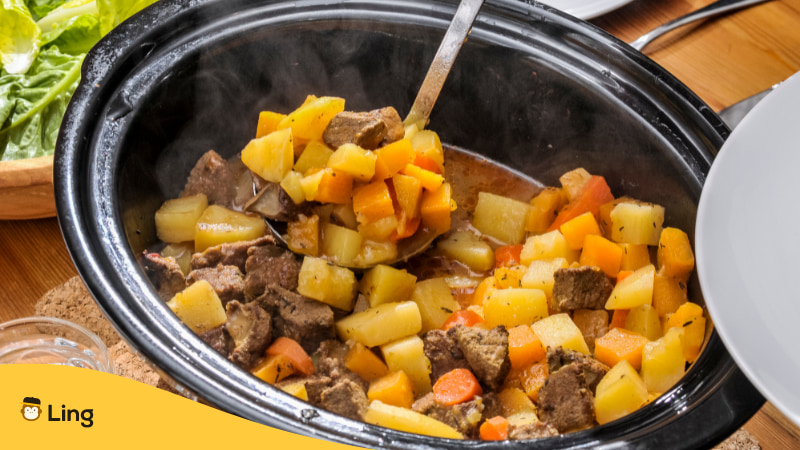
Cazuela (Casserole)
Also known as Terracotta Ramekins, it is a shallow container, casserole, or saucepan made of clay. The Cazuela is one of the most important kitchen utensils in Spanish cuisine as well as Latin American countries.
You will even find a dish that is called after the recipient where it’s cooked: a seafood casserole (Cazuela de mariscos), and many other delicious dishes like the Chilean Cazuela de cerdo.
Cazuela is often used for cooking on the grill or oven, and then it is directly served without changing recipients.
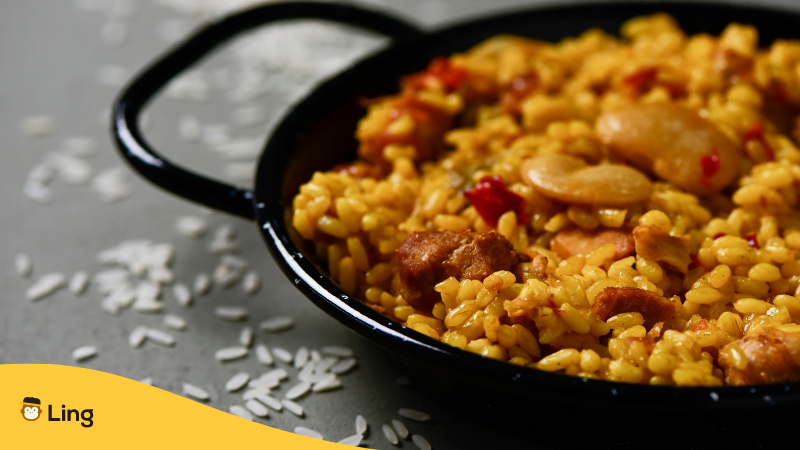
Paellera (Paella Pan)
The Paella Pan is another Spanish utensil that has given its name to its dish. The Paellera is a metal container similar to a frying pan, with a shallow depth and handles on the sides. It is used in Spain to prepare the famous paella, served in the same container.
Culturally, people eat the paella directly from the paella pan, which also means sharing the food with others.
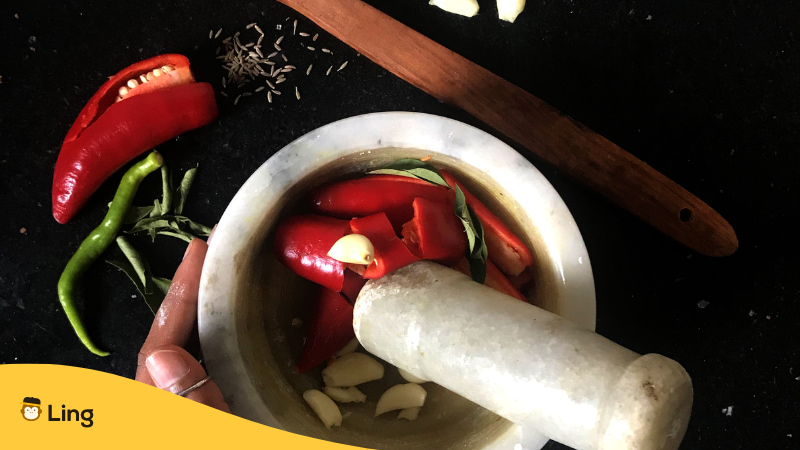
Piedra De Moler/Mortero (Mortar And Pestle)
It is a slightly deep dish with a wide concave surface to grind grains and process food.
People have globally concluded that the origins of the Mortar are ancient. Many believe that it traces back to Ancient Egypt or even earlier settlements when man needed to grind certain foods such as grains, seeds, or hard-shelled fruits to eat.
In some Hispanic countries, the Mortar was made of smooth volcanic stone. And it is, even until this day, a very traditional and essential cooking utensil in many Latino households. No technology can compete with a Mortar!
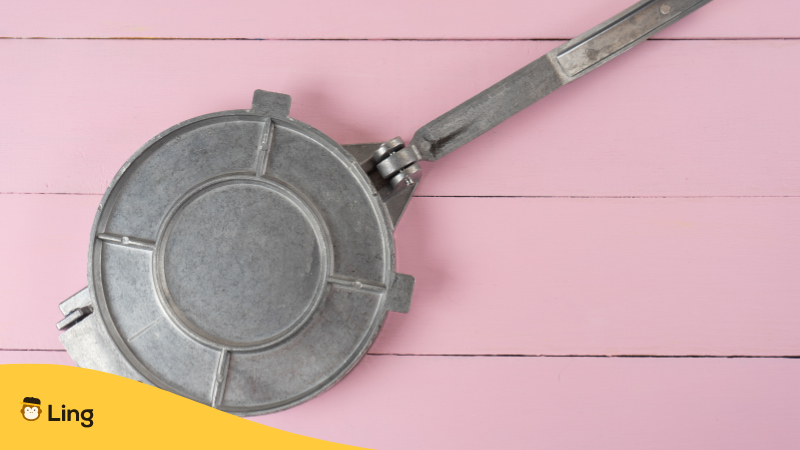
Tortilladora (Tortilla Machine)
A tortilla machine is a machine for making several tortillas simultaneously and by hand. They are widely used in Mexico to prepare tortillas that will later be the base of tacos or other Mexican dishes.
It was made of wood in ancient times, and now they are made of aluminum or steel for more durability.
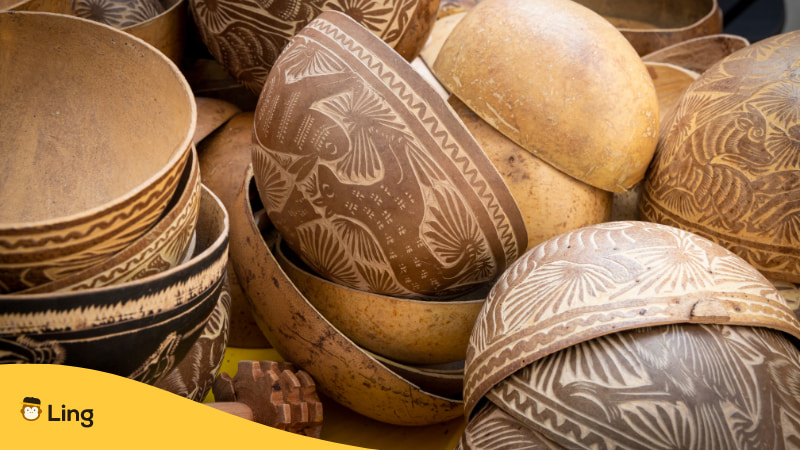
Jícara/Vasija (Jícara/Vessel)
The jícara is a beautiful container built with clay or using the jícaro (calabash) fruit from the ‘Güira’ tree, hence its name.
Since ancient times, people in Mexico have been using the jícara for drinking liquids, especially chocolate. It is a complete cultural experience to drink from a Jícara, as it also has impressive designs across its surface
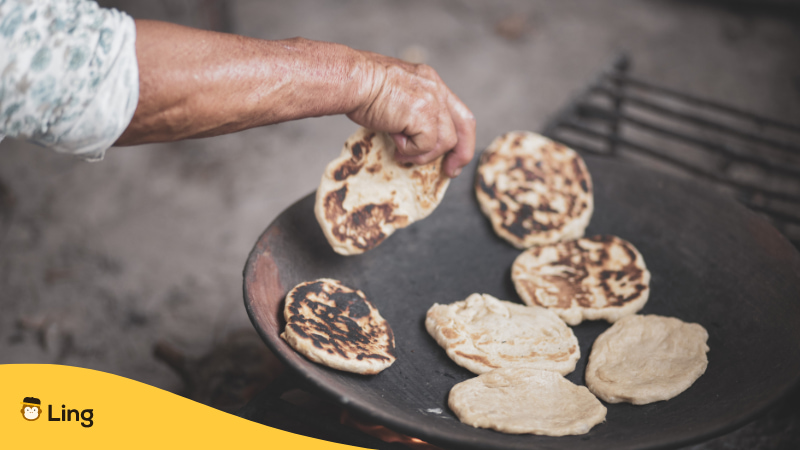
Paila (Paila)
The Paila is a large, round, shallow metal pot used in many Latin American countries for cooking. In Ibarra, Ecuador, for example, people have used this pot for many years to make Fritada (Braised pork dish}) or ice cream, the famous and delicious ‘Helados de Paila’ (Paila ice cream).
Today, we often have them as souvenirs and home decorations. However, they are pretty heavy due to their metallic material and can’t be easily moved from one place to another.
Still, older generations of the family usually have a lot of love for their Paila pots and would leave them as an important inheritance to the younger generations. Even I own one now!
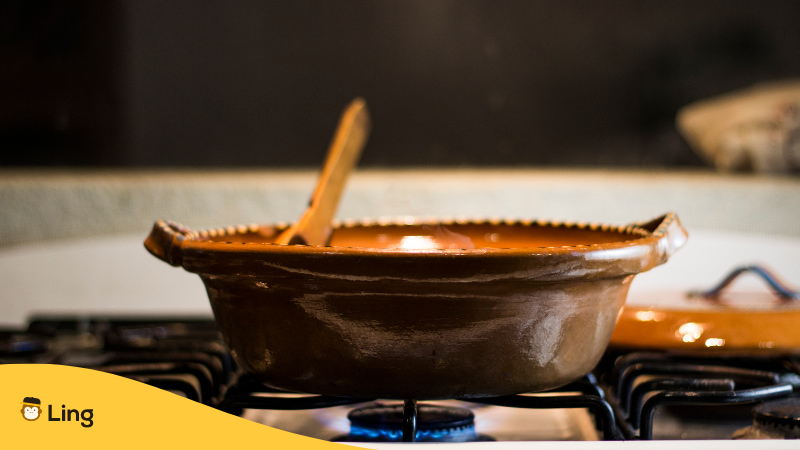
Olla De Barro (Clay Pot)
The ‘Olla de barro’ is a spherical-shaped clay pot of different sizes that ancient people from different parts of Latin America have used.
Lately, people have limited the use of clay pots or any other kitchen utensils made of clay. It is used only for serving or decorating houses, but not for cooking. The reason is most likely that these vessels may be made of toxic compounds harmful to health.
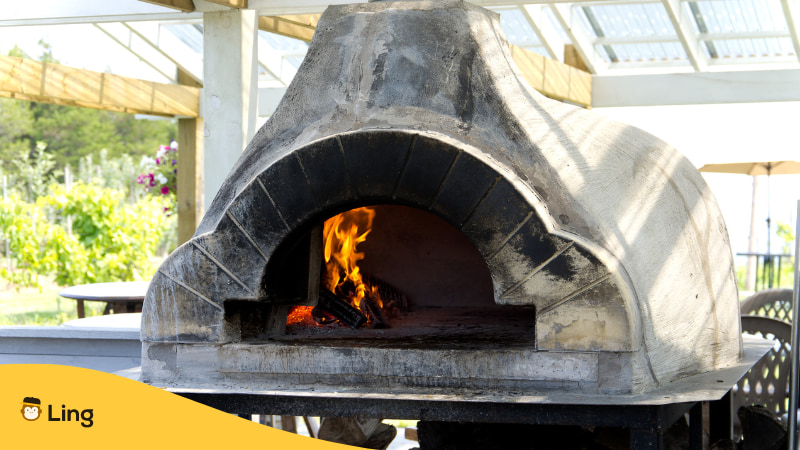
El Horno De Barro Y Leña (Clay And Wood Oven)
Its function is to capture the heat to transmit it to the food inside. The oven is one of the fascinating ancient technologies that has been left as a legacy to us.
It is undoubtedly an indigenous tradition maintained in Latin countries since pre-Inca times.
It is also known as ‘panadero’ (baker), as people often use it to prepare bread. However, it can heat, cook, toast, or melt different food, such as chicken or other dishes.
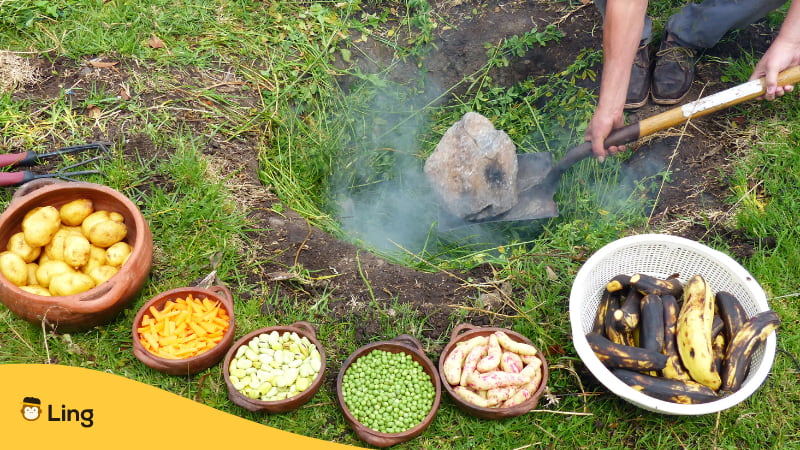
Pachamanca
I’m always happy to talk about indigenous languages such as Quichua. The word Pachamanca comes from ‘Pacha,’ which translates to ‘Tierra’ (Earth/Land), and ‘Manka,’ which means ‘olla’ (Pot).
Rather than a utensil, it is an Andean ancestral cooking technique that uses dirt, stones, and plantain leaves to cook. That is why its name is ‘Pacha’ (land) because the utensils are natural objects from the earth.
The dishes cooked with this technique can be meat with mellocos (ulluco), mote (hominy), and vegetables on top of the plantain or aromatic leaves. Those leaves are on top of pre-heated stones inside the pot-like hole in the ground.
A Complete List Of Common Kitchen Vocabulary
The following vocabulary will teach you the names of the most used cooking tools with their English translations and sounds to hear the pronunciations.
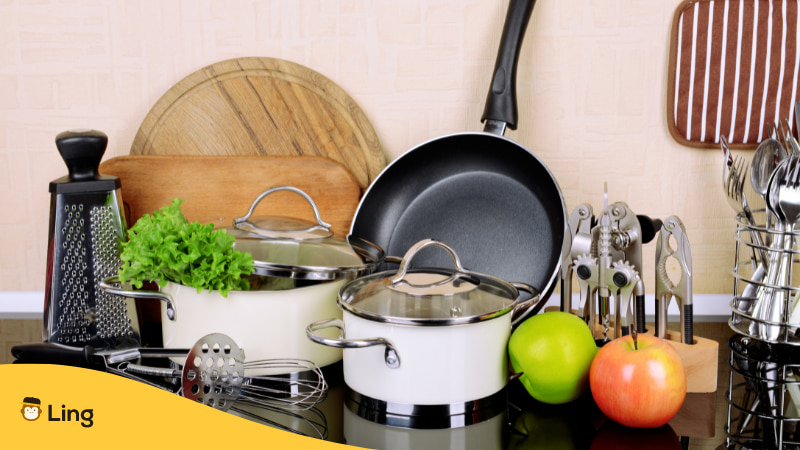
Kitchen Tools
| English | Spanish | Pronunciation Sounds |
| Chopping board | Tabla de cortar/Tabla para picar | / |
| Measuring cup | Taza medidora | |
| Pot | La olla | |
| Frying pan | La sartén | |
| Ladle | El cucharón | |
| Fork | El tenedor | |
| Knife | El cuchillo | |
| Spatula | La espátula | |
| Strainer | El colador | |
| Cutlery | Los cubiertos | |
| Bowl | Pocillo | |
| Can opener | Abrelatas | |
| Dessert plate | Plato de postre | |
| Corkscrew | Sacacorchos | |
| Cooking tongs | Pinza | |
| Flat dish | Plato plano | |
| Soup dish | Plato hondo | |
| Wineglass | Copa | |
| Kitchen gloves/Oven mitts | Guantes de cocina | |
| Salt shaker | Salero | |
| Pepper shaker | Pimentero | |
| Rolling pin | Rodillo de amasar | |
| Meat mallet/Tenderizer | Mazo de carne/Ablandador espalmadera | / |
| Mould | Molde | |
| Mug | Taza | |
| Scissors | Tijeras | |
| Sugar bowl | Azucarero | |
| Oil cruet | Dispensador de aceite/Aceitera | / |
| Teapot | Tetera | |
| Teaspoon | Cucharilla | |
| Tray | Bandeja charola | |
| Tub | Tarrina | |
| Grater | Rallador |
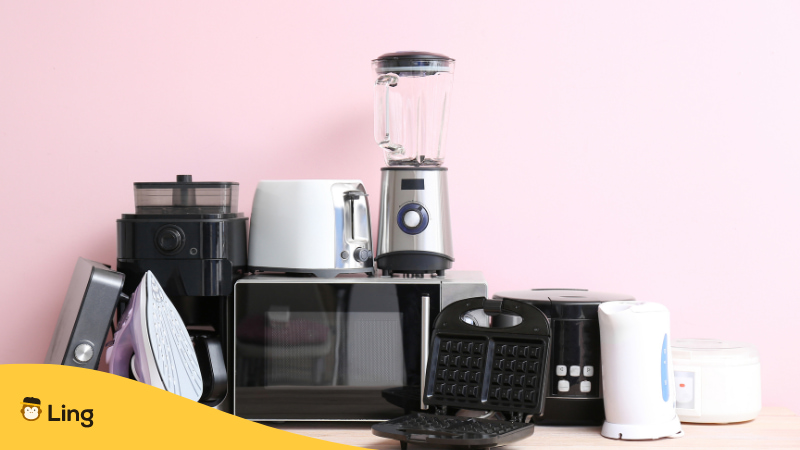
Kitchen Appliances
| English | Spanish | Pronunciation Sound |
| Coffee maker | Cafetera | |
| Oven | El horno | |
| Blender | La licuadora | |
| Air Fryer | Freidora de aire | |
| The stove | La estufa | |
| Stove | Cocina/Fogón | / |
| Hand juicer | Exprimidor | |
| Griddle | Grill/Parrilla/Plancha de cocina | / |
| Mincer | Picadora | |
| Fridge | Refrigerador/Nevera | / |
| Microwave | Microondas | |
| Water kettle | Hervidor de agua/Jarra eléctrica/Hervidor | / / |
| Toaster | Tostadora | |
| Freezer | Congelador |
Interested In Learning More Culture And Spanish Vocabulary?
In today’s blog post, you learned some Spanish vocabulary. Also, you filled yourself with insight into how ancient communities cooked their food, how we still cook in Spanish-speaking countries, and how these tools have evolved.
If you travel to a Spanish-speaking country and go to ‘la cocina‘ (the kitchen) at your friend’s house, you will be able to name many of the utensils found there.
If you love international cuisine, specifically from Hispanic countries, I invite you to visit our other blogs. Go through a journey of the most mouth-watering dishes from Latin America. Discover important terms for vegetables in Spanish. And, of course, something that can never miss on a chef’s plate: learning about the flavors.
Start Learning Spanish With Ling App!
Your Spanish language learning will become much more accessible, more efficient, and more fun when you start using the Ling app. It will make you feel like you are playing a game with its interactive and complete lessons backed and researched by linguistics experts.
You will achieve fluency quickly by practicing your grammar, vocabulary, and pronunciation skills for at least 15 minutes every day. You can have the Ling app with you wherever you go!
Be ready to have the most exciting conversations about cooking, food, or any other topic of interest with Spanish native speakers. New vocabulary is ready for you to learn!
You are just a click away from becoming fluent in Spanish. Download the Ling app on the Play Store or App Store and begin your entertaining lessons!