

Turkish art is well-known for its colorful and vivid style. If you ever visit a Turkish art museum, let me tell you what you’ll see inside: A set of painted tiles and ceramic pottery, mostly in eye-catching blue; handmade silk carpets, mostly in red; colorful Turkish marbling and some Islamic calligraphy.
If you have been learning Turkish for a while now, you probably realize that the Turkish language is as rich as Turkish culture. And if you know colors in Turkish vocabulary, you can talk about an art piece and appreciate it from another perspective.
So, in this blog post, you’ll learn the color vocabulary in Turkish and a few distinctive colors with their meanings in Turkish culture.

Table of Contents
Symbolic Colors Of Turkey
As I mentioned above, Turkish art has some distinctive colors, such as blues and reds, which are very common in traditional Turkish artwork. Still, there are also some other symbolic Turkish colors you must know.
Let’s learn why these colors are significant in Turkish culture and what meanings they hide!
Red – Kırmızı
Pronunciation:
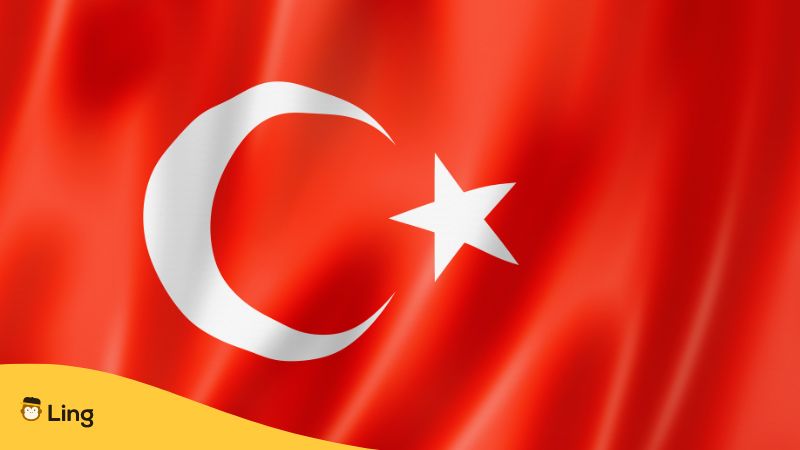
Red is a powerful color for Turks since it is the color of the Turkish flag, and hence red is a symbol of Turkish nationalism.
Red also symbolizes virginity. Traditionally, women wear a red belt known as the chastity belt on their wedding day. However, it is no longer a popular tradition in modern society.
Women often wear a red veil on their heads on the wedding day or henna night because it is believed that red brings luck to weddings.
Red is also the color of the famous Turkish tea, çay.
In general terms, red signifies intense feelings such as passion and anger.
Blue – Mavi
Pronunciation:
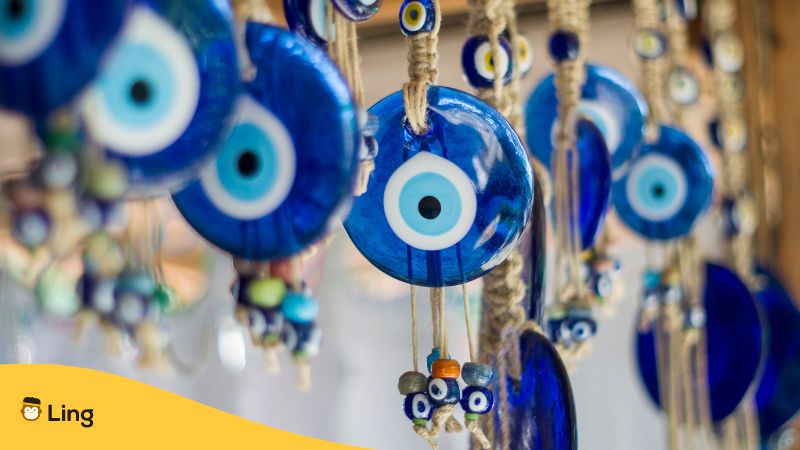
It’s believed that blue has a healing effect and is a repellent against evil; that’s why the evil eye, “Nazar boncuğu,” is blue.
Blue is a must-have color in traditional Turkish art, such as “çini,” the art of painting glazed tile and ceramics.
Blue is also associated with the sky; hence it symbolizes Göktengri (God) in Turkic shamanistic religion. This is why many Turkic countries include blue in their flags.
Blue is also a symbol of famous seaside resorts in Turkey. If you visit Antalya or Muğla, you’ll see the brightest shades of blue in hidden coves!
Green – Yeşil
Pronunciation:
Green is usually associated with Islam and was also the color of the Ottoman flag.
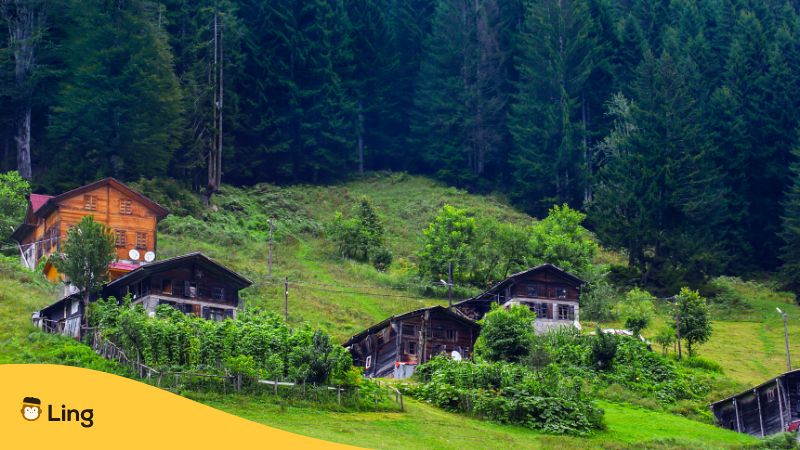
Green reminds me of the Black Sea Region in Turkey because it is the greenest region, with huge forests, steep mountains, limpid waterfalls, and wooden cottages, in the country. The nature there is totally worth seeing!
In a broader aspect, the green color represents nature and life.
What’s The Relation Between Turquoise And Turkey?
Turquoise is a unique color mixture of blue and green, which is actually named after a gem. Turquoise is derived from the French word “turquois,” which means Turkish.
The reason behind this is that the gem was first brought to Europe through Turkey from mines in the historical Khorasan province of Iran. However, the first recorded use of turquoise as a color name in English was in the 16th century.
After providing you with some cultural knowledge, let’s get to the language-learning part!
Colors In Turkish
Colors are a must-know topic in A1 Turkish and are super easy. I’m sure you can memorize them in a very short time as enthusiastic Turkish learners, right?
| English | Turkish | Pronunciation |
|---|---|---|
| Color | Renk | |
| Red | Kırmızı | |
| Bordeaux | Bordo | |
| Pink | Pembe | |
| Orange | Turuncu | |
| Yellow | Sarı | |
| Green | Yeşil | |
| Khaki | Haki | |
| Blue | Mavi | |
| Light blue | Açık mavi | |
| Navy blue | Lacivert | |
| Purple | Mor | |
| Lilac | Lila | |
| Turquoise | Turkuaz | |
| Brown | Kahverengi | |
| Beige | Bej | |
| Black | Siyah | |
| Gray | Gri | |
| White | Beyaz | |
| Gold | Altın rengi | |
| Silver | Gümüş rengi | |
| Dark | Koyu | |
| Light | Açık | |
| What’s your favorite color? | En sevdiğin renk ne? | |
| My favorite color is… | En sevdiğim renk… |
How To Emphasize Colors In Turkish?
The good news is that it doesn’t require any vowel harmony rules. Yay! To emphasize the color in Turkish, you should reduplicate the color itself.
Take the first syllable of the color name and attach one of those consonants, “p, m, s, r,” at the end of that syllable. Then add the newly formed syllable to the beginning of the actual color name. Here is an example for you:
Example: Siyah = si (the first syllable) + m = Simsiyah
- Simsiyah – Pitch black –
- Bembeyaz – Snow white –
- Kıpkırmızı – Bright red –
- Masmavi – Bright blue –
- Yemyeşil – Bright green –
- Mosmor – Deep purple –
- Pespembe – Light pink –
- Sapsarı – Bright yellow –
Color Shades In Turkish
Sometimes, we can’t be sure about the color, but it kind of looks like a shade of it. In those times, we say -ish colors like bluish. Now, you’ll learn how to add that -ish in Turkish colors.
You need to use the suffix -(i, ı)mtrak, which is used to produce adjectives that describe the color.
- sarımtrak – yellowish, sallow –
- mavimtrak – blueish, blued –
The suffix -(i)msi is also used for the same function.
- morumsu – purplish –
- mavimsi – bluish –
- sarımsı – yellowish –
- pembemsi – pinkish –
- grimsi – grayish –
How Do You Say “Colors” In Turkish?
Colors in Turkish means renkler. The word renk means “color,” and by adding the suffix -ler, it becomes plural, meaning “colors.” So, when talking about multiple colors, you would say renkler.
Frequently Asked Questions About Colors In Turkish
1. How Do You Say Colors In Turkish?
Colors in Turkish means renkler. “Renk” means color, and “-ler” makes it plural, so “renkler” means colors.
2. What Are Turkish Traditional Colors?
Traditional Turkish colors are blue, red, and green. These are commonly seen in Turkish art, carpets, tiles, and symbols, each having cultural significance.
3. What Is The Famous Color Of Turkey?
Blue, particularly the shade of turquoise, is often considered the famous color of Turkey. It is widely used in Turkish art, ceramics, and the well-known “evil eye” amulets.
4. Why Is It Called Turkish Blue?
Turkish blue, or turquoise, got its name because the mineral was historically traded through Turkey. The word “turquoise” comes from the French word meaning “Turkish,” as the color was associated with Turkey.
Conclusion
In conclusion, learning colors in Turkish is a great way to better understand the country’s rich culture and art. Colors like red and blue have special meanings in Turkish traditions and are often seen in beautiful artwork. By knowing these colors, you can enjoy Turkish art more and talk about it in a new way. So if you love Turkey, now is a perfect time to start learning the colors in Turkish!