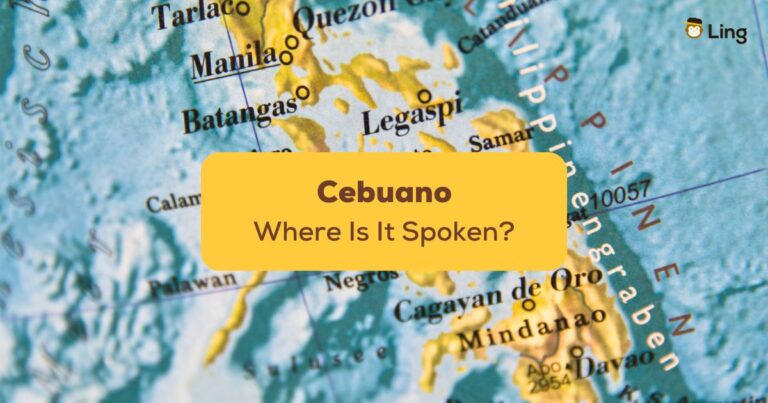


Heading to Cebu? Before packing your travel essentials, nail down saying hello in Cebuano. With Cebuano as the heartbeat of Visayas and Mindanao, it’s a must that you learn to say Kumusta with a smile.
So if you want to vibe from the very first day, learn their language. Let this guide be your lifeline to immerse yourself in the community. Because trust me, hearing an English speaker talking like a native Cebuano is enough to light up the locals.
How Do You Say Hello In Cebuano?
There are different ways of saying hello in Cebuano. But, locals commonly start with the standard Kumusta or Kumusta ka? It comes from the Spanish phrase ¿Cómo está? meaning “Hello” or “How are you?”

Aside from being safe and polite, Kumusta is also versatile. Just add bai (friend/mate) to greet a friend or manong/manang (older man/woman) when speaking with someone older than you.
Common Ways To Say Hello In Cebuano
Aside from kumusta ka, there are other ways of saying hello in Cebuano without actually saying “hello.” Similar to speaking Tagalog, choosing your greetings depends on two factors:
- Whether you’re speaking with elders/strangers (formal) or with friends (casual), and
- What time of the day is it (morning, afternoon, evening)
Formal Vs Casual Cebuano Greetings
Unlike speaking English, Cebuano phrases have a more direct tone. No filter, no euphemisms. This could often lead you to think Cebuanos don’t have a formal or casual distinction for their greetings.
However, respect is still deeply ingrained in the Visayan languages, Cebuano included. Casual interactions may only need a simple eyebrow flash (raising eyebrows while smiling).
But in formal situations, you pair your greetings with gestures like amin (pagmano in Tagalog)—taking the elder’s hand while bringing it to your forehead—and adding honorifics.
Good Day! – Maayong Adlaw!
Maayong adlaw is the catch-all formal way of saying hello in Cebuano. Whether you’re talking to elders or chatting with strangers, you can never go wrong with this greeting. You can even use this as your opening in a written letter, formal speeches, or customer service interactions at any time of the day.
How Are You? – Kumusta Ka?
Kumusta ka is the most common casual Cebuano greeting you’ll hear. It is a warm and approachable way of greeting friends, chatting with friendly strangers, or even with shop owners in relaxed settings.
What’s more, it is versatile enough that you can drop the ka to make this greeting more relaxed.
How Have You Been? – Kumusta Man Ka?
If kumusta ka? sounds more direct when greeting in Cebuano, soften it by adding man. Not only is it more conversational, but it also shows genuine interest. It’s like asking the person, “So, how are things?”
This is the perfect way of saying hello in Cebuano when reconnecting with someone you have previously met.
Hey, Bro! What’s up? – Bai! Kumusta?
Use this greeting if you want to be more “in” with the locals. Bai (can be spelled as bay as well) is the Cebuano slang for “bro,” “buddy,” or “dude,” and is often used among men in casual, friendly settings.

Time-Based Cebuano Greetings
The best way to make a good impression in the Philippines, especially in Cebu and other Visayan-speaking islands, is to use the right greeting at the right time of the day. Not only is it polite, but it also shows your willingness to meet the locals halfway in their language.
Good Morning – Maayong Buntag
This is the go-to Cebuano morning greeting anywhere from sunrise until 10 AM. Maayo means “good,” while buntag means “morning.” Saying this warm greeting with a smile is always appreciated by the locals, especially when you address older folks, people you have just met, or even hotel staff.
Good Noon – Maayong Udto
Used around 11 in the morning to 1 PM, Maayong udto is a more formal time-based greeting. Even if it’s not common in casual conversations, it’s useful if you want to be extra polite (in a business lunch or when chatting with people in uniform or older than you).
Pro Tip: Use this during lunchtime in government offices or rural towns.
Good Afternoon – Maayong Hapon
Both a polite and professional greeting, maayong hapon is literally “good afternoon” when translated into English. It is used from early afternoon (2 PM) until sundown.
Whether you are strolling in the market, visiting a school, or doing business, this Cebuano greeting shows both friendliness and respect.
Good Evening – Maayong Gabii
The perfect way to end the day is to greet someone with a warm Maayong gabii. It sets a respectful tone for dinner time conversations, community gatherings, or when meeting elders in their homes.
You’ll often hear this when dropping by a neighbor’s house in the evening or before town fiesta dinners start.
Dos And Don’ts When You Say Hello In Cebuano
So you’ve got kumusta and maayong buntag down. But like any Philippine culture, whether in Luzon, Visayas, or Mindanao, how you say hello in Cebuano matters just as much as the words themselves.
Here are some pro-traveller tips if you want a good time mingling with the locals:
Dos
- Use time-appropriate greetings: Locals appreciate your sincerity more if you say Maayong buntag in the morning than just Kumusta. Not only does this show respect for daily rhythms, but also attention to detail.
- Greet authority figures, elders, and strangers formally: Always pair your greeting with polite titles or honorifics like Manong (older man), Manang (older woman), or Tito/Tita (uncle/aunt). When unsure, just revert to the English Sir/Ma’am.
- Pair polite introductions with gestures: Handshakes are fine in most cases. But if you’re in doubt, especially when addressing elders, either slightly nod or bow with your hand placed over your chest.
- Smile and make eye contact: Even if you mispronounce Cebuano phrases, smiling and making eye contact shows the locals your well-meaning nature. Plus, it makes anyone you’re talking with at ease.
- Thank those who helped you in any way: Filipinos are known for being hospitable—Cebuanos included. But they would deeply appreciate it if you return the help they’ve extended with a simple daghang salamat (thank you) or daghan kaayong salamat (thank you very much).
Don’ts
- Avoid greeting strangers too casually: It can be tempting to say Bai! Kumusta? to someone you’ve just met, but it comes across as overly familiar. To avoid getting raised eyebrows, stick with Kumusta? or time-based greetings instead.
- Overusing English: Filipinos understand English wherever they are in the country. But you come off as boastful if you overuse that foreign language, even if you know just a single Cebuano phrase.
- Ignoring non-verbal cues: Avoiding eye contact or brushing you off (when in a rush) means the person is not ready to engage in a conversation. A simple nod or smile may mean more than a full Kumusta ka?
How Do You Say Hello In Cebuano?
Kumusta is the most widely used way of saying hello in Cebuano. If you want to be more polite, especially when talking to elders, say Maayong adlaw or use time-specific greetings instead.
Vocabulary List: Cebuano Greetings
| English | Cebuano | Pronounciation |
|---|---|---|
| Hello? | Kumusta? | koo-moos-TAH |
| How are you? | Kumusta ka? | koo-moos-TAH kah |
| Hey! | Hoy! | HOY |
| How have you been? | Kumusta man ka? | koo-MOOS-tah mahn kah |
| How are you all there? | Kumusta man mo diha? | koo-MOOS-tah moh dee-HAH |
| Bro / Buddy | Bai! | BAH-ee |
| Hey, bro! What’s up? | Bai! Kumusta? | BAH-ee koo-MOOS-tah |
| Good day! | Maayong adlaw! | mah-AH-yong AHD-law |
| Good morning | Maayong buntag | mah-AH-yong BOON-tag |
| Good noon | Maayong udto | mah-AH-yong OOD-toh |
| Good afternoon | Maayong hapon | mah-AH-yong HAH-pon |
| Good evening | Maayong gabii | mah-AH-yong gah-BEE-ee |
| Older sister Older woman (Casual) | Ate | AH-teh |
| Older woman (Formal) | Manang | MAH-nang |
| Older brother Older man(Casual) | Kuya | KUH-yah |
| Older man (Formal) | Manong | MAH-nong |
| Aunt | Tita | TEE-tah |
| Uncle | Tito | TEE-toh |
| Son (affectionate) | Doy | DOY |
| Daughter (affectionate) | Inday | IN-die |
Tips When Learning To Say Hello In Cebuano
Saying hello in Cebuano is like learning the heart of these beautiful people. Whether backpacking across the Visayan islands or chatting with locals over Tagalog foods, here are some tips to help you practice these Cebuano greetings more:
- Nail down the basics: Drilling down on the core Cebuano greetings (Kumusta ka?, Maayong adlaw, or the time-based Maayong bunta/udto/gabii) goes a long way in daily interactions.
- Practice one new Cebuano greeting daily: Say each greeting in a loud voice, whether alone or with the locals, to build not only muscle memory but also your confidence. Plus, it will make you appreciate the Cebuano’s rhythmic, vowel-rich sound.
- Know when to be formal: Cebuano is very high on respect, especially toward authority figures and elders. Learn the difference between formal greetings and informal ones, and use them accordingly.
- Words + Actions always: Cebuanos are highly warm and expressive. A respectful nod, a smile, or placing your hand on your chest while greeting them adds sincerity to your words.
- Surround yourself with Cebuano sounds: Watch, listen, or join groups where Cebuano is spoken daily. The more you hear these Cebuano greetings, the faster you’ll commit them to memory. Can’t find good resources? Ling has got you covered.

Frequently Asked Questions About Saying Hello In Cebuano
Is Cebuano Different From Bisaya?
Bisaya (Visayan) is a broader term, referring to a family of languages spoken in the central and southern Philippines. Cebuano is the most widely spoken among the many Bisaya languages (Waray Waray, Kinaray-a, Hiligaynon, etc.). But, many Filipinos would say Bisaya when what they meant was Cebuano. So, if you're travelling to Cebu or Mindanao and you ask someone if they're speaking Bisaya, they would say yes, but mean Cebuano. However, in Leyte or Iloilo, their Bisaya dialect would be Waray or Hiligaynon, not Cebuano.
Is Bisaya Easy To Learn?
If you already know Tagalog, learning Cebuano words and phrases would feel familiar. It has a flexible grammar, shorter words, and straightforward pronunciation—entirely good for beginners. Add that the Bisayas are warm and supportive. But if you're a total newbie, you may need more time to learn Bisaya, especially since their sentence structure and verb focus systems are different.
Are Bisaya And Tagalog The Same?
Bisaya and Tagalog are not the same. They have different grammar rules, vocabulary, and ways of expression. Although some words may sound similar, Bisaya (Cebuano included) and Tagalog aren't mutually intelligible. Even Filipinos themselves may learn Tagalog and Cebuano as a second language.
Which Is Harder Tagalog Or Cebuano?
Cebuano has simpler verb conjugations and is less formal, making it easier for learners to grasp. Tagalog, on the other hand, has more resources, available music, and TV shows that make immersion simpler. Thus, neither Cebuano nor Tagalog is harder than the other; it's just what language you're used to that makes the difference.
Learning To Greet In Cebuano: Wrapping Up
Mastering hello in Cebuano is your first step to truly experiencing the warmth of Cebuano hospitality. With three of the five amazing cities in the Philippines speaking this language, even the simplest Kumusta ka to Maayong gabii shows the locals that you’re curious, kind, and open to their way of life.
And, with Ling adding Cebuano to its language courses, learning this unique dialect will make you love the Philippines more.
Speak Like A Cebuano From Day 1 With Ling
Traveling down South of the Philippines soon? You need to add one more language to the mix if you’re already speaking Tagalog—Cebuano!
Forget stiff classroom vocabulary. The Ling app adds fun to learning with its gamified, bite-sized lessons and interactive Dialog chatbot.
Whether you’re heading to Bohol, Cebu, or Davao, let Ling be your pocket guide when you learn Cebuano. You’ll soon hear the locals warmly welcome you with Ato ni, bai! (This is ours, mate!)