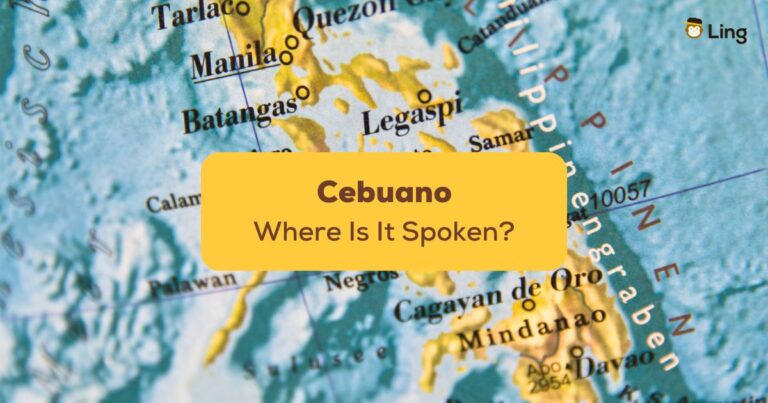


Headed to Central Visayas or Mindanao to explore these Philippine islands? Then you’re more likely to hear people speaking Bisaya, not Tagalog!
You may feel like a fish out of water and don’t understand its cultural nuances, but don’t fret. By brushing up on a few useful Bisaya phrases, you can speak the local language in no time.
Here’s your quick and beginner-friendly guide to Bisaya phrases that are easy to understand and even easier to use.

What Are The Must-Learn Bisaya Phrases?
Let’s face it. There are a ton of Bisaya phrases. However, you have to start somewhere, and that is with the basics.
Whether you’re buying snacks, asking for directions, or simply trying not to get lost, here are some must-learn phrases to include:
| English | Bisaya | Pronunciation |
|---|---|---|
| Hello | Kumusta | koo-MOOS-tah |
| Thank you | Salamat | sah-LAH-maht |
| Yes | Oo | oh-OH |
| No/None | Dili | DEE-lee |
| I don’t understand | Wala ko kasabot | wah-lah koh kah-sah-boht |
| Excuse me/Sorry | Pasayloa ko | pah-sigh-loh-ah-koh |
| Help me! | Tabangi ko! Tabang! | tah-bah-ng-ee koh tah-bahng |
| Delicious | Lami | lah-MEE |
| Friend | Higala Amigo (male) Amiga (female) | hee-GAH-lah ah-MEE-go ah-MEE-gah |
| How much?/How much is this? | Tagpila | tag-PEE-lah |
If you’re worrying about the grammar, don’t be! Locals are super kind when you’re trying to speak their language. Just go for it.
Common Bisaya Phrases For Every Occasion
With the Bisaya language as one of the leading dialects in the Philippines, apart from being one of the eight major languages of this country, this dialect will help you mingle effortlessly in the local scene.
Aside from the usual hello in Cebuano, here are some useful Bisaya phrases that you should jot down in your cheat sheet!
Greetings And Courtesies In Bisaya
Properly greeting the locals is one way to make a good first impression. Respect is one of the best traits of every Filipino, hence the need to learn the courtesies.
| English | Bisaya | Pronunciation |
|---|---|---|
| How are you? | Kumusta ka? | koo-MOOS-tah kah |
| Good morning | Maayong buntag | mah-AH-yong BOON-tag |
| Good afternoon | Maayong hapon | mah-AH-yong HAH-pon |
| Good evening | Maayong gabii | mah-AH-yong gah-BEE-ee |
| Good day | Maayong adlaw | mah-AH-yong ad-LAW |
| I’m fine/I’m good | Maayo ra Okay ra | mah-AH-yoh rah OH-kay rah |
| You’re welcome | Walay sapayan Way sapayan | wah-LIE sah-PAH-yan wie sah-PAH-yan |
| Welcome | Dayon | DAH-yon |
| Goodbye | Babay | bah-bye |
| We’re going now/We’re leaving | Adto na mi | AHD-toh nah mee |
Basic Questions In Bisaya
You’ll encounter these Bisaya questions anytime you’re asking for help, you’re curious about something, or you want to get to know someone.
| English | Bisaya | Pronunciation |
|---|---|---|
| Who | Kinsa | KEEN-sah |
| What | Unsa | OON-sah |
| When | Kanus-a | kah-NOO-sah |
| Where | Asa | AH-sah |
| Why | Ngano man Ngano | NGAH-noh mahnNGAH-noh |
| How | Unsaon | oon-SAH-on |
| What’s your name? | Unsa imo ngalan? | OON-sah ee-mong NGAH-lan |
| What’s your job? | Unsa imong trabaho? | OON-sah ee-mong trah-BAH-ho |
| Where are you from? | Taga-asa ka? | tah-gah-AH-sah kah |
| Where are you going? | Asa ka paingon? | AH-sah kah pah-ing-ON |
| How old are you? | Pila imong edad? | PEE-lah ee-mog eh-DAHD |
| What is this? | Unsa ni? | OON-sah nee |
| What do you want to eat? | Unsa imong ganahan kaonon? | OON-sah ee-mong gah-NAH-han kah-oh-NON |
| What time is it? | Unsa nang oras? | OON-sah nang OH-ras |
| Do you like _____? | Ganahan ka og ____? | gah-NAH-han kah og ___? |
| Can I ask a question? | Pwede ko mangutana? | PWEH-deh koh mang-oo-TAH-nah |

Essential Bisaya Phrases For Travelers
These essential Bisaya phrases that I’ve chosen for you are needed as you go about in the different tourist spots, especially the must-visit Philippine islands in the country.
Use these for commuting (jeepney, bus, taxi, ferry, etc.) or when asking directions.
| English | Bisaya | Pronunciation |
|---|---|---|
| Where should I go? | Asa ko muadto? | AH-sah koh muh-AD-toh |
| Where are you going? | Asa ka padulong? Asa ka muadto? | AH-sah kah pah-DUH-long AH-sah kah muh-AD-toh |
| Where exactly? | Asa dapit? | AH-sah dah-PIT |
| Where is this going? | Asa ni padulong? | AH-sah ni pah-DUH-long |
| Where should I get off? | Asa ko manaog? | AH-sah koh mah-NAH-og |
| How much is the fare? | Tagpila ang pliti? | tag-PI-lah ang PLI-ti |
| Where is the restroom? | Asa ang kasilyas? | AH-sah ang kah-SEEL-yas |
| I’ll get off here/I’ll stop here | Diri lang Para | DIH-rih lang PAH-rah |
| I’ll go ahead | Muuna usa ko | muh-UH-nah uh-SAH koh |
| I’ll get going | Muadto na ko | muh-AD-toh nah koh |
| I’m going home | Muuli na ko | muh-uh-LI na-KO |
| I don’t know | Wala ko kahibalo Ambot! | WA-la ko ka-hi-BAH-lo AM-bot! |
| Please fetch me | Sundua ko palihug | sun-DU-a koh pa-LI-hug |
| Visit me | Anhia ko | an-HI-a ko |
| Come here | Ali diri | A-li DI-ri |
Food And Market Phrases In Bisaya
If you’re heading to the market or trying out some of the local cuisine during the Kadayawan Festival, this set of Bisaya phrases will make your experience tastier.
| English | Bisaya | Pronunciation |
|---|---|---|
| Hello! (when you call from outside) | Ayo! | AH-yo |
| I’ll buy | Papalita ko Mupalit ko | pah-pah-LI-ta ko mu-pah-LIT ko |
| I’ll pay | Mubayad ko | mu-BAH-yad ko |
| How much? | Tagpila? | tag-PEE-lah? |
| How much is this? | Tagpila ni? | tag-PEE-lah nee |
| How much is everything? | Pila tanan? | PEE-lah ta-NAN |
| Can I ask for a discount? | Pwede muhangyo? | PWE-de mu-hang-YO |
| What is this? | Unsa ni? | UN-sa ni? |
| What is that? | Unsa na? | UN-sa na? |
| I want to order… | Gusto ko mag-order og… | GOOS-toh koh mag-OR-der og… |
| Let’s pray | Mag ampo ta | mag-AM-po ta |
| Just get it | Kuha lang | KU-ha lang |
| I’m already hungry! | Gutom na ko! | GU-tom na ko! |
| I want to eat! | Gusto na ko mukaon! | GUS-to nah ko mu-KA-on! |
| Let’s eat! | Mangaon ta! | ma-NGA-on ta! |
| Delicious! | Lami! Kalami! | la-MI! ka-la-MI! |
| It’s delicious! | Lami kaayo! | lah-MEE kah-AH-yo |
| Eat more! | Kaon pa! | KA-on pa! |
| Is it spicy? | Halang ni? | hah-LANG nee? |
| No rice, please. | Walay kan-on, palihug. | wah-LIE KAHN-on, pah-LEE-hoog |
| I’m full. | Busog na ko. | BOO-sog nah koh |
| I don’t want any more | Dili na ko | DI-li na ko |
Note: Market may mean the big concrete market that has it all, or a small stall you’ll see as you walk the streets.
Bisaya Slang And Street Phrases
If you’re planning to speak like people who live in Bisaya-speaking regions of the Philippines, you’ve got to be familiar with street phrases and slang. Aside from adding flavor, these Bisaya phrases help you talk better with the locals, especially the younger speakers.
| English | Bisaya | Pronunciation | When To Use |
|---|---|---|---|
| Bro/Dude | Bai | bai | – To call a male friend, but it can be used toward other genders – A term of endearment between friends when they meet – Address a stranger to ask a question |
| Sis | Dai | dai | A term of endearment between female friends |
| Yeah/I know/That’s true | Lage | LAH-geh | -To agree with a statement -Empathizing mid-convo |
| Take care! | Amping! Ayo-ayo! | AHM-ping ayo-ayo | – Both are parting salutations that remind the other person to be cautious, especially if they have an upcoming trip – Amping is more commonly used for relatives, while ayo-ayo is used between friends, but can be used interchangeably |
| Kuan | KUH-an | Doesn’t have a similar or equivalent in English (no real meaning), but is used as a filler when you don’t know the exact word to use | |
| Extravagant/fancy | Laysho | lay-SHO | To describe someone who owns something fancy or the latest stuff |
| Hopefully/in God’s time | Puhon | PU-hon | A unique Bisaya phrase that is used to wish something good to happen, or that you’re hopeful will happen |
| God forbid! | Simbako! | SIM-ba-ko | Paired with the gesture of knocking on wood to ward off bad vibes and prevent something untoward from happening |
How Do You Say Phrases In Bisaya?
“Phrases” in Bisaya language translates to hugpong sa mga pulong. Hugpong means “groups” while sa is the equivalent of “of” that refers to the object mga pulong (words).
But in casual conversations or when speaking with foreigners or beginners, you can just say “phrases.” Bisayas are known to mix English with Cebuano words and Tagalog, too.
However, if you want to ask a local how to say a specific Bisaya phrase, you can say Unsaon pag-ingon og [English word] sa Bisaya? – How do you say [English word] in Bisaya?
Tips For Learning Bisaya Phrases
Speaking one language from the 17 regions of the Philippines may be too much for some. But polyglot or not, there are a few handy tricks that can help you learn at least a Bisaya expression like you’ve been speaking it since you were born:
- Start with sounds: Bisaya language is a phonetic language. What you read is what you say.
- Make flashcards for your phone: Be creative and save the top 10 Bisaya phrases you want to master for the week as your lock screen images. This way, you get instant study time every time you check your phone.
- Talk, talk, and talk: There’s no better way to master the Bisaya language than to talk with every local you see. Whether it’s the taxi driver, the market vendor, or a street sweeper, just speak in Bisaya. Most, if not all, are kind and patient enough to help. You’ll probably find one local who will give you free pronunciation advice while you’re at it.
- Don’t stress about the grammar: Most first-time learners of the Bisaya language automatically analyze its grammar rather than practice it. Start small with Bisaya phrases, then learn the verbs and the sentence structure later.
- Use a language app: Language learning apps like Ling feature fun, bite-sized Bisaya language lessons. This way, you can master words and phrases even if you only have 15 minutes to spare. You’ll be surprised at how much you can learn in so little time.
Frequently Asked Questions About Bisaya Phrases
How Difficult Is Bisaya To Learn?
Bisaya is generally considered one of the easier Filipino languages for English speakers. It has a straightforward sentence structure, with its words spoken the way you see them. The grammar can be tricky at the advanced level, but basic phrases for casual convo or travel are doable for beginners. And if you find yourself in a pinch, locals are quick to help you practice and are super encouraging.
What Are The Basic Bisaya Words?
For first-time learners of Bisaya, words for basic conversation are where you should start. Some of these words include Kumusta (Hello), Salamat (Thank you), Oo (Yes), Dili (No), Lami (Delicious), Higala or Amigo/Amiga (Friend), and Tagpila? (How Much?). There are a lot more, but the basics can be applied to any situation.
What Does Chuy Mean In Bisaya?
Chuy, sometimes spelled as tsuy (pronounced as choo-ee) or chuy kaayo (pronounced as choo-ee ka-ayo), is a flexible Bisaya slang that means “cool,” “stylish,” or “awesome.” You often hear this term to compliment someone’s skills, outfit, or belongings. But you should get the context first before you can pinpoint its direct translation.

Ready For The Real Bisaya Adventure?
Knowing the difference between salamat and tagpila may seem trivial, but gaining new knowledge is still knowledge. All these little Bisaya phrases add up to change your travel experience, whether you’re headed to Cebu or somewhere south in Mindanao.
So take your pick of these phrases and enjoy your time connecting with the people.
Use Ling And Speak Bisaya Confidently!
Hopping on a plane to one of the Philippine islands in the future? If you are, you probably don’t have time for language textbooks. No problem, as you can learn Bisaya on the go with the Ling app.
With bite-sized lessons, fun quizzes, and a Dialog chatbot that helps you sound like a true local, becoming a Bisaya master is possible in just 7 days! And, even if you miss a day of practice, you can go back where you left off thanks to its Streak Saver.
Excited to learn Cebuano right now? Load up your phone with Ling and say maayong buntag in the most Bisaya-sounding accent you have.