

Are you packing your bags for the Philippines at the moment and wondering what language you’ll hear the most? English and Tagalog are the official languages of this country, but there’s one regional tongue that stands out not only in the streets of Cebu but also in the Visayan islands and Mindanao: Cebuano.
But where is Cebuano spoken, and why should you learn it? Buckle up and let’s break down why you should speak Cebuano for your next adventure.
Where Is Cebuano Spoken?
Cebuano is a part of the Austronesian family of languages, is the second most spoken language in the Philippines. Over 20 million Filipinos speak Cebuano, making it the most widely spoken regional language in the country. Though it is not the official language, it is the standard dialect of people living in the Visayas and parts of Mindanao.

Let’s take a virtual trip to the Philippines and learn where is Cebuano spoken in this linguistically diverse country.
Cebuano-Speaking Regions In The Philippines

Cebu
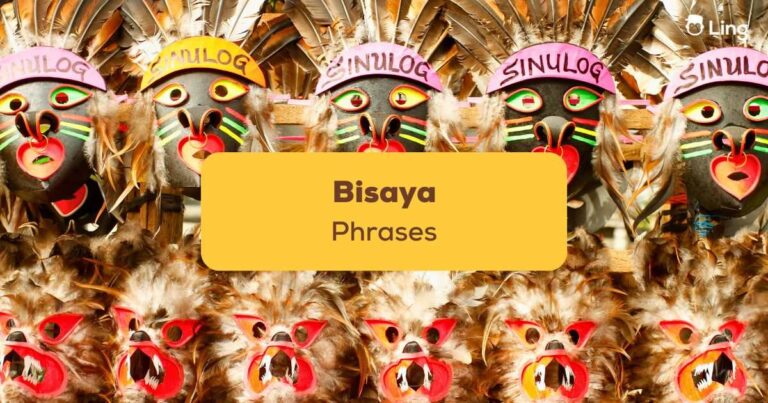
Known as the birthplace of the Cebuano language and the oldest city in the Philippines, a bustling province in Central Visayas. It is known not only for its historical landmarks but also for its vibrant cities and white-sand beaches like those in Bantayan Island and Mactan. It’s also where the famous Sinulog festival is celebrated.
Since the name of the place answers where is Cebuano spoken, you’ll find most speakers of the language here. Standard Cebuano is the dialect spoken, which is considered the prestige variant.
Bohol
Bohol is the island famous for its Chocolate Hills, heritage churches, and tarsiers. Though Cebuano is spoken, locals refer to it as the Boholano dialect. Unlike Cebuano with a glottal stop, Boholano is known for replacing “y” to “j” and “d” to “r.”
Here are some examples.
| English | Standard Cebuano | Boholano |
|---|---|---|
| Go there | Adto | Arto |
| Then / And then | Niya | Nija |
| Just a moment | Kadyot lang | Kajot lang |
Siquijor
A mystical province in the Negros island region, Siquijor is known for its serene beaches, waterfalls, and healing traditions. Though it is also a Cebuano speaking area, Siquijor Cebuano has a softer, more melodic tone to it. “U” is replaced with “o,” and “l’ is replaced with “d.”
| English | Standard Cebuano | Siquijor Variant |
|---|---|---|
| What? | Unsa? | Onsa? |
| From | Gikan | Gigan |
| No / Not | Dili | Dede |
Negros Oriental
Negros Oriental is a province you’ll find on the eastern side of the Negros island. It is home to Dumaguete City, a known laid-back diving spot and university town. Though Cebuano is the lingua franca in urban areas and the lowlands, some inland areas have Hiligaynon mixed with it.
With this, you can expect their Cebuano here to be smoother and a tone similar to Ilonggo, thanks to its proximity to Negros Occidental.
| English | Standard Cebuano | Negros Oriental Variant |
|---|---|---|
| Later | Unya | Yana or Onya |
| I’m hungry | Gigutom ko | Gigutom na ko |
| Where are you going? | Asa ka paingon? | Diin ka padulong? |
Note: Diin is more often used than asa, which is a likely influence from the Hiligaynon (Ilonggo) speech patterns.
Western Leyte
Eastern Leyte is known to speak Waray-Waray, another variant of the Visayan languages. However, in the western half of this province, especially those near Southern Leyte (Ormoc and Maasin), people speak Cebuano more, locally known as Kana.
The key characteristic of their Cebuano here is the blend of Waray-Waray with Cebuano, especially those who speak bilingually.
| English | Standard Cebuano | Western Leyte Variant |
|---|---|---|
| Child | Bata | Báta (stressed) |
| None / Nothing | Wala | Waray |
| Nice / Good | Nindot | Maupay |
Davao
If Cebu is the major urban hub of the Visayan region, Davao is the Mindanao counterpart where is Cebuano spoken. Apart from the famous durian and majestic Mount Apo, this city is known for its multicultural vibe. Their Cebuano here is often referred to as Bisayang Dabawenyo or Davao Bisaya, a curious mix of Tagalog, English, and other indigenous languages.
Hence, it’s not surprising that code-switching is very common, with people fluidly mixing English and Tagalog with Cebuano.
| English | Standard Cebuano | Davao Variant |
|---|---|---|
| What a waste | Anugon | Kasayang |
| Jeans | Karsonis | Pantalon |
| You’ll come over? | Ari ka diri? | Adto ka diri? |
Cagayan De Oro
Known for being the “City of Golden Friendship,” Cagayan de Oro is the eco-tourism gateway of Northern Mindanao, with whitewater rafting included. But while Cebuano is widely spoken here, it has a slight “twang” or “sing-song” rhythm, made more lively by playful expressions like oy (hey) and ba.
| English | Standard Cebuano | Cagayan de Oro Variant |
|---|---|---|
| Nice/Beautiful | Nindot | Tsáda |
| What is this? | Unsa man ni? | Onsa ni oy? |
| Dear/Beloved | Gugma/Palangga | Langga |
Iligan
Located in Lanao del Norte, Iligan is a known place for waterfalls, with Maria Cristina Falls being the most famous. The Cebuano spoken here is similar to that of Cagayan de Oro’s, but with influence from Maranao and other regional languages.
For example, locals often add softeners like lagi and man to make the Iligan Bisaya more courteous and expressive.
| English | Standard Cebuano | Iligan Variant |
|---|---|---|
| How are you? | Kumusta ka? | Kumusta man ka? |
| How much is this? | Tagpila ni? | Pila ni bay? |
| Don’t do that | Ayaw ana | Ayaw lagi ana |
Cebuano Goes International: Countries Where Binisaya Is Spoken
Cebuano may not be the national language of the Philippines, but it has traveled far beyond the islands. This is all thanks to the millions of Overseas Filipino Workers (OFWs) and migrants who brought not only their culture, but their first language as well.
You might be surprised where is Cebuano spoken around the world.
United States Of America
The U.S. is home to one of the largest Filipino populations that reside outside of the Philippines. This is especially true in Nevada, California, Texas, and Hawaii. Though Tagalog is more widely taught, Cebuano is often spoken in community gatherings and at home.
Canada
Canadian cities like Winnipeg, Vancouver, and Toronto have growing Cebuano-speaking communities. Many migrant Filipinos in the ’90s and 2000s still speak Cebuano at home, with most speakers among the older generation.
Australia
You’ll hear Cebuano spoken alongside English and Tagalog within the Filipino communities in Brisbane, Melbourne, and Sydney. It is most commonly used when visiting community centers, Filipino-owned businesses, and during family parties.
Saudi Arabia And United Arab Emirates
The Middle East, particularly the United Arab Emirates (UAE) and Saudi Arabia, hosts a large number of OFWs, including those coming from Visayas and Mindanao. You’ll most often meet Cebuano people in hospitals, domestic work environments, construction sites, and during community meetups.
Japan
In certain Japanese prefectures like Tokyo and Nagoya, you’ll hear Filipino workers and spouses speak Cebuano at home. The Japanese government even supports Filipino language and culture exchange events, which include Cebuano.
Is Cebuano The Same As Bisaya?
This is a common question that even native speakers are confused about. However, Cebuano is not the same as Bisaya. Though they are often interchanged, Cebuano is one of the Visayan languages (Bisaya) spoken in Visayas and Mindanao.
So, if you encounter someone saying they speak Bisaya, they often mean Cebuano. But they can also refer to Waray or Hiligaynon, which are separate languages from the same language family.

What Makes The Cebuano Language Unique?
Apart from its warmth and personality, there are a lot of things that make Cebuano unique from the other languages in the Philippines. Here are a few of these reasons:
- Rhythmic and vowel-heavy: Unlike the other dialects in this language family, Cebuano has a smooth and melodic rhythm thanks to its frequent use of open vowel phonemes. This makes Cebuano lyrical-sounding and expressive.
- Rich verb system with affixes: Cebuano has a complex system of affixes that not only indicate verb tense but also focus and aspect. This is akin to Tagalog conjugation. It may be confusing at first, but all these allow the speakers to fully express the detailed nuances in actions like who is doing what and for whom.
- Use of politeness markers ba and bitaw: Cebuano, like Tagalog, has its own set of honorifics. But to further show respect, standard Cebuano uses politeness markers like ba (used in yes-no questions) and bitaw (used for emphasis or agreement) to help convey not only politeness, but also subtle emotional cues and agreement.
- Culture embedded in proverbs and songs: Many of the traditional Visayan songs and witty proverbs have their roots in Cebuano. One such Cebuano proverb is Bisan og gamay, basta kanunay (Even if it’s small, as long as it’s consistent), emphasizing the value of steady effort and persistence over big and inconsistent actions.
How Do You Say ‘Where Is Cebuano Spoken’ In Cebuano?
Asa gamiton ang Cebuano? is the literal translation of the question “Where is Cebuano spoken?” Asa means “where,” gamiton means “spoken” or “to be used,” and ang Cebuano means “the Cebuano.”
However, if you want to sound more natural and conversational, Asa ba gamiton ang Cebuano nga sinultian?, meaning “Where is the Cebuano language spoken/used?”
Your Mini Cebuano Vocabulary Cheat Sheet
Since you already got your list of Cebuano speaking area in the Philippines, add these words and phrases to your travel cheat sheet.
| English | Cebuano | Pronunciation |
|---|---|---|
| Visayas | Kabisay-an | Ka-bi-SAY-an |
| Mindanao | Mindanaw | Min-da-NAW |
| Province | Probinsya | Pro-BIN-sya |
| City | Dakbayan | Dak-BA-yan |
| Island | Isla | IS-la |
| Region | Rehiyon | Re-HI-yon |
| Language | Pinulongan | Pi-nu-LONG-an |
| People | Tawo | TA-wo |
| Cebuano is spoken in… | Ginapanulti ang Cebuano sa… | Gi-na-pa-NUL-ti ang se-boo-A-no sa… |
| They speak Cebuano. | Nagasulti sila ug Cebuano. | Na-ga-SUL-ti SI-la og se-boo-A-no |
| Do you speak Cebuano? | Nagasulti ka ug Cebuano? | Na-ga-SUL-ti ka og se-boo-A-no |
Tips To Learn Cebuano Like Native Speakers
Now that you know where is Cebuano spoken, it’s time you practice. But before that, here are some tips to keep in mind.
- Stick to the basics: You may be excited to speak Cebuano like a true local, but you won’t get there if you don’t nail the basics first. Start with the basic Cebuano greetings like “Hello” and “Good morning,” directions, and phrases for ordering food. This will give you confidence fast.
- Label household items: Using sticky notes for language learning is a known powerful tool to build visual memory fast. This is because it helps you associate words with physical objects. Plus, it builds contextual learning and active recall to solidify your Cebuano vocabulary.
- Practice as much as you can with Cebuano speakers: It doesn’t matter whether you do this online or with your favorite tindera at your local Filipino store. Practicing out loud helps more than silent memorization. Plus, you gain more amigos and amigas (and free pronunciation lessons!) in the process.
- Use language learning apps like Ling: Even if you only get 15 minutes of spare time, apps like Ling break the lessons into manageable chunks so you won’t feel overwhelmed within a cultural context.
Frequently Asked Questions About Where Is Cebuano Spoken
What Is Cebuano Famous For?
Cebuano is famous for being one of the most widely spoken oral Philippine languages, especially in the Visayas and Mindanao regions. It is the native language of Cebu, often called the “Queen City of the South.” It’s known for its rich oral tradition, which includes harana (serenades), balak (poetry), and folk songs like Matud Nila. Language aside, Cebuano culture is known for its vibrant festivals (Sinulog), delicious cuisine (lechon), and friendly people.
Is Cebuano A Tribe In The Philippines?
Though there are many indigenous tribes in the Philippines, Cebuano is not a tribe. It is a term that pertains to both the language spoken by millions of Filipinos and the people who are native speakers of Cebuano, who come from Cebu and other nearby regions.
Why Is Cebuano Spoken In Mindanao?
Though Cebuano originated from Cebu, it is also spoken in Mindanao because of migration and resettlement. Many Cebuano-speaking families from Visayas migrated to Mindanao to find land and livelihood opportunities. Thus, Cebuano became the dominant language spoken in many parts of Mindanao, especially in Davao, Cagayan de Oro, and General Santos.
Cebuano: The Language Of The Philippine Islands
Now that we have solved the mystery behind where is Cebuano spoken, the next better question should be: Where will you go with it?
Whether you choose to enjoy the relaxing beaches of Siquijor, frolic through the history-laden streets of Cebu, or enjoy mingling with the Davaoenos, Cebuano is not just a regional language. It is your ticket to life-changing conversations and unforgettable memories.
Amaze Locals With Your Cebuano Skills With Ling!
Before your next Philippine adventure, make sure you have a language learning app to practice your Cebuano regularly. The perfect solution? Ling app.
Apart from the interactive Cebuano language lessons, you also get real-life dialogues broken down into bite-sized chunks. So, even if you can only spare 10 minutes for language learning each day, you still gain a significant amount of knowledge.
Whether you want to connect with your new Cebuano friends or respect the culture, let Ling help you do all that and more. Download Ling today and start learning Cebuano before your plane even lands!