


When traveling to Malaysia, a simple “good morning” can go a long way in connecting with locals and showing respect for the culture.
While English is widely understood, making the effort to greet people in Malay or using common local phrases can create a more meaningful and immersive travel experience.
Whether you’re ordering breakfast at a street-side kopitiam or greeting your hotel staff, knowing how to say “good morning” in different ways will help you start your day on the right note.
In this blog, we’ll explore three ways to say good morning in Malaysia—Selamat pagi, pagi, Assalamualaikum, and Good morning (in English)—and when to use each one.
Plus, stay tuned until the end as we share tips on how learning basic Malay phrases with Ling can transform your travel experience, helping you connect with locals and appreciate the culture on a deeper level!
Table of Contents

Four Ways To Say Good Morning In Malay
1) Selamat Pagi – The Universal Morning Greeting
If you want to greet someone in Malay, Selamat pagi is the standard way to say good morning in Malay.
It’s polite, widely understood, and appropriate in almost any situation—whether you’re greeting hotel staff, ordering breakfast at a local restaurant, or meeting new people.
For example, if you step into a café and say Selamat pagi! to the staff, they’ll likely respond with a smile and return the greeting.
You can also use it in more formal settings, like when checking into a hotel or speaking to someone older.
Locals appreciate when travelers make an effort to speak their language, and starting your day with Selamat pagi is a great way to build a friendly connection.
Examples:
You enter a café for breakfast
You: Selamat pagi!
Staff: Selamat pagi! Nak minum apa? (Good morning! What would you like to drink?)
Checking in at your hotel
You: Selamat pagi! Saya ada tempahan bilik. (Good morning! I have a room booking.)
2) Pagi – The Casual, Friendly Greeting
If Selamat pagi feels a bit formal, you can just say Pagi!—the casual, shortened version.
It’s similar to how English speakers say Morning! instead of Good morning! in a relaxed setting.
You’ll often hear Malaysians greeting each other this way, especially among friends, colleagues, or in informal situations.
If you’re ordering food at a street stall or catching a Grab ride, a simple Pagi! with a smile can make your interaction feel more natural.
For example, if you’re buying nasi lemak from a vendor, you might say, Pagi, boss! Berapa harga nasi lemak ni? (Morning, boss! How much is this nasi lemak?)
It’s friendly and approachable and helps you blend in with the locals.
Examples:
You meet a fellow traveler at a hostel
You: Pagi! Nak pergi mana hari ini? (Morning! Where are you going today?)
Buying nasi lemak from a street stall
You: Pagi, boss! Berapa harga nasi lemak ni? (Morning, boss! How much is this nasi lemak?)
Note: In Malaysia, it’s common to hear people casually call each other boss as a friendly and respectful way to address someone, regardless of their actual job title. Whether you’re ordering food at a hawker stall, hailing a Grab, or chatting with a shopkeeper, calling someone boss adds a warm, laid-back touch to everyday interactions.

3) Assalamualaikum – A Greeting With Religious Significance
Assalamualaikum, which means “peace be upon you,” is a traditional Islamic greeting commonly used by Malay Muslims.
While non-Muslims can say it, some reserved Malays may find it unusual, so it’s best to be mindful of the context.
Generally, if a Malay Muslim greets you with Assalamualaikum, it’s perfectly fine to respond with Waalaikumsalam (and peace be upon you too).
If you’re visiting a Malay household or joining a cultural experience, using Assalamualaikum can be a sign of respect.
For example, if you’re staying in a traditional homestay in a kampung (village) and greet your hosts with Assalamualaikum, they will likely appreciate the effort.
However, if you’re unsure whether to use it, sticking to Selamat pagi is always a safe choice.
Examples:
You visit a homestay in a kampung (Malay village)
You: Assalamualaikum!
Host: Waalaikumsalam! Jemput masuk! (And peace be upon you too! Please come in!)
Meeting a Malay tour guide
You: Assalamualaikum, abang! Hari ini kita nak ke mana? (Peace be upon you, brother! Where are we going today?)
4) Good Morning – The Safe & Widely Understood Greeting
If you’re still getting the hang of Malay, saying Good morning! is always an option.
Since English is widely spoken in Malaysia, especially in cities like Kuala Lumpur, Penang, and Johor Bahru, locals will understand and respond to it without any issues.
You’ll find Good morning works well in hotels, cafés, and tourist areas.
However, if you want to make your experience more immersive, trying Selamat pagi or Pagi can help you connect with locals on a deeper level.
Even if your pronunciation isn’t perfect, the effort alone will earn you smiles and friendly responses.
Examples:
You enter a hotel lobby
You: Good morning!
Receptionist: Good morning! How can I help you today?
Ordering coffee at a café
You: Good morning! Can I have a kopi tarik, please?

All You Need To Know About Good Morning In Malay: A Quick Guide
| English | Malay | Description | Example |
|---|---|---|---|
| Good morning | Selamat pagi | The standard and polite way to greet someone in the morning. Suitable for formal and informal situations, such as in hotels, restaurants, and when meeting new people. | You enter a café for breakfast You: Selamat pagi! Staff: Selamat pagi! Nak minum apa? (Good morning! What would you like to drink?) |
| Morning! | Pagi! | A casual, friendly way to say good morning, similar to how English speakers shorten “Good morning” to “Morning!” Common among friends, colleagues, or informal settings. | Buying nasi lemak from a street stall You: Pagi, boss! Berapa harga nasi lemak ni? (Morning, boss! How much is this nasi lemak?) |
| Peace be upon you | Assalamualaikum | A traditional Islamic greeting used by Malay Muslims. Non-Muslims can say it, but some may find it unusual. If greeted with Assalamualaikum, the correct response is Waalaikumsalam. | Visiting a homestay in a kampung You: Assalamualaikum! Host: Waalaikumsalam! Jemput masuk! (And peace be upon you too! Please come in!) |
| Good morning | Good morning | English is widely understood in Malaysia, making this a safe choice for travelers. However, using Malay greetings can enhance your experience and connection with locals. | Ordering coffee at a café You: Good morning! Can I have a kopi tarik, please? |
Tips: How To Respond To Good Morning In Malay Like A Native
Responding to a morning greeting in Malaysia isn’t just about words—it’s about creating a warm and friendly connection with the locals.
Here are some simple yet effective ways to reply appropriately and make your interactions more meaningful:
1. Match the greeting – If someone says Selamat pagi, reply with Selamat pagi juga (Good morning to you too). If they greet you with Pagi!, you can casually say Pagi! back, just like saying “Morning!” in English. For Assalamualaikum, respond with Waalaikumsalam to show respect.
2. Use the right expression for the right setting – Selamat pagi works in both formal and casual settings, while Pagi is best for relaxed, friendly interactions. If you’re unsure, Selamat pagi is always a safe choice.
3. Accompany your greeting with a gesture – A smile, a small wave, or even a slight nod adds warmth to your greeting. In formal settings, a handshake or the traditional salam (light handshake with the right hand, then touching the chest) is a sign of respect.
4. Keep the conversation going – Malaysians love to talk about food! After greeting someone, try asking Dah makan? (Have you eaten?). It’s a common and friendly way to keep the conversation flowing, especially with locals.
Bonus: What Makes A Good Morning In Malaysia?
If you desire to learn Malay, we cannot go forward without understanding what the local people enjoy doing in the mornings to make it good, if not great!
Knowing that not everyone may want to do this, here are some common ways the Malay culture welcomes each morning.
- Starting the day by waking up the entire family early and performing the Fajr (dawn) prayer is important in Malay Muslim culture. It is a spiritual practice that sets the tone for the day.
- Taking care of personal hygiene, such as brushing teeth, washing the face, and grooming, is a common part of the morning routine. Malay people believe in cleanliness and take pride in being presentable.
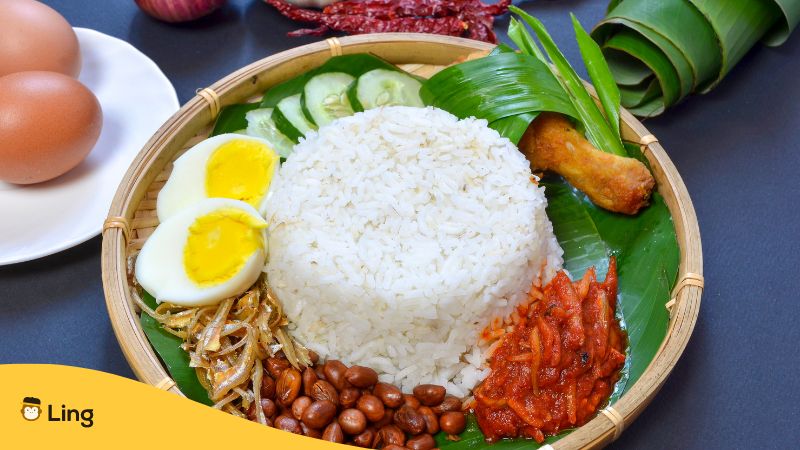
- Having a nutritious breakfast is valued in Malay culture. Traditional Malay breakfast options may include nasi lemak (fragrant rice dish with side dishes), roti canai (flaky flatbread), or local delicacies.
- Malays often interact socially with family members, friends, or neighbors in the morning. Greetings, conversations, and sharing updates on daily matters are common during this time.
- Working or attending school is a significant part of a complete Malay morning. Malay people place importance on productivity and personal development.
- Malaysians and Indonesians often experience commuting as part of their morning routine, whether driving, taking public transportation, or walking to their destinations. This may involve encountering traffic or witnessing the bustling cityscape.
- They also enjoy spending time outdoors and appreciate the natural beauty of their surroundings. Taking a morning stroll, exercising, or breathing fresh air are valued activities.
Agreeing that lifestyles and individual choices differ, the details above are purely to give you a picture of a perfect Malay good morning!
How Do You Say Good Morning in Malay?
The most common way to say good morning in Malay is Selamat pagi.
It’s a polite and widely understood greeting that you can use in almost any situation, whether you’re greeting hotel staff, ordering breakfast, or meeting new people.
Other ways to say good morning include Pagi! (a casual, friendly version), Assalamualaikum (used mainly by Malay Muslims), and even the English “Good morning!”, which is widely understood in Malaysia.
Choosing the right greeting based on the setting can help you connect with locals and show appreciation for their culture.

Frequently Asked Questions About Good Morning In Malay
Can I Say Assalamualaikum To Non-Muslims?
While Assalamualaikum is traditionally a greeting among Muslims, in Malaysia, non-Muslims are generally not expected to say it.
Some reserved Malays may feel it’s unusual for a non-Muslim to initiate this greeting, as it has religious significance.
However, if a Muslim greets you with Assalamualaikum, it’s perfectly fine to reply with Waalaikumsalam.
If you’re unsure, sticking to Selamat pagi is always a respectful and appropriate choice.
How Do Muslims Say Good Morning?
Muslims in different regions speak different languages, so their morning greetings vary.
In Arabic-speaking communities (in the Arab world), “Good morning” is Sabah al-khair.
However, for Malay Muslims, the most common morning greeting is Selamat pagi.
Many also use Assalamualaikum (which means “peace be upon you”), though this greeting is not specific to the morning and can be used at any time of the day.
If a Malay Muslim greets you with Assalamualaikum, it’s polite to reply with Waalaikumsalam (and peace be upon you too).
What Is Makan Pagi?
Makan pagi translates to “morning meal”, which simply means breakfast in Malay!
Malaysians take breakfast seriously, and it’s common to start the day with flavorful Malay food like nasi lemak (coconut rice with sambal), roti canai (flaky flatbread with curry), or kopi tarik (frothy pulled coffee).
Someone might even ask you, Dah makan pagi? which means “Have you had breakfast?”—a common and friendly way Malaysians check in with each other.
If you hear this, it’s not just small talk—it’s a sign of hospitality and care!
Greet Like a Local, Connect Like a Traveler Now!
By now, you’ve learned Four Ways To Say Good Morning In Malay, from the polite and universal Selamat Pagi – The Universal Morning Greeting to the casual Pagi – The Casual, Friendly Greeting, the culturally significant Assalamualaikum – A Greeting with Religious Significance, and the safe, widely understood Good Morning – The Safe & Widely Understood Greeting.
With our Tips: How To Respond To Good Morning In Malay Like A Native, you’re now prepared to greet locals naturally and respectfully!
Language is more than just words—it’s a bridge to deeper cultural understanding.
By learning and using basic greetings in Malay like these ones, you’re showing respect for the local way of life and making your journey even more immersive.
So, the next time you travel to Malaysia, start your day with confidence, connect with the people around you, and make every “good morning” a meaningful one!
Your First Step To Speaking Malay Starts Here!
In this blog, we explored Four Ways To Say Good Morning In Malay, from the universal Selamat Pagi to the casual Pagi, the meaningful Assalamualaikum, and the widely understood Good Morning.
Want to go beyond just greetings?
Learn Malaysian right now and gain the confidence to navigate conversations like a pro.
Download Ling on your device today and start immersing yourself in the local culture!