

For many of us, language is more than just words—it’s a connection to our roots, a way to honor our ancestors, and a bridge to cherished family memories.
If you grew up hearing your grandparents speak Malay but never fully understood their conversations, learning the language now can be a meaningful way to reconnect.
Imagine sitting down with your nenek (grandmother), asking, “Apa khabar?” (How are you?), or showing your love with, “Saya rindu nenek” (I miss you).
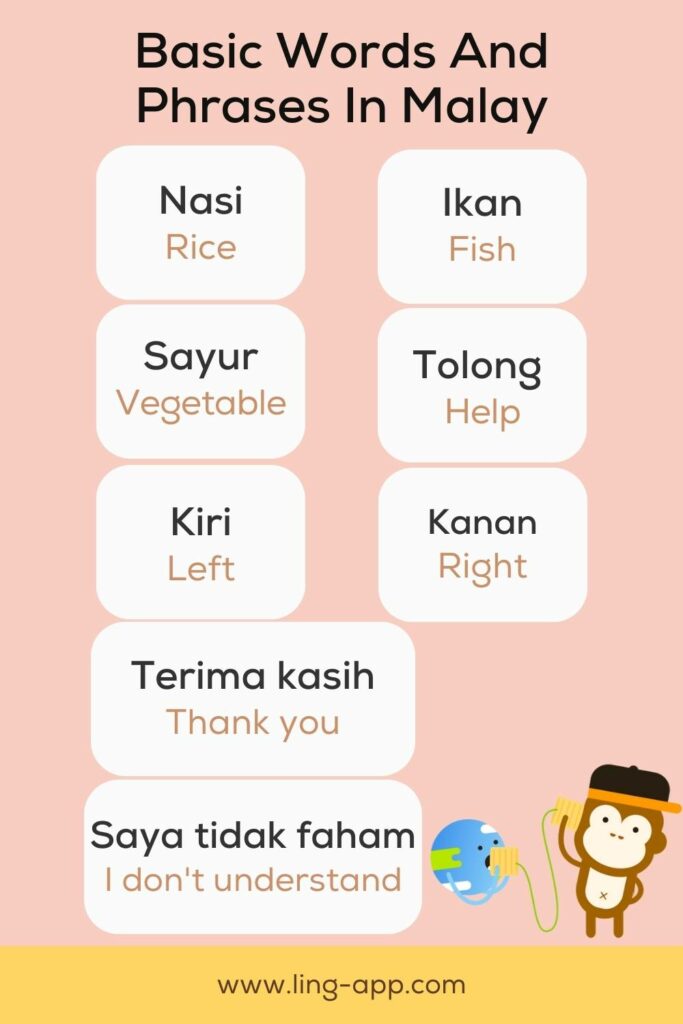
These basic words and phrases in Malay can unlock stories, traditions, and a sense of belonging that only language can provide.
Whether you want to reminisce with older relatives, explore your family’s past, or embrace the culture passed down through generations, learning Malay is a powerful step.
This guide will introduce you to 50+ basic words and phrases in Malay, helping you not just to speak the language but to truly feel at home in it.
Let’s get started!

Table Of Contents
1. Everyday Greetings & Warm Expressions
A simple greeting can brighten your family’s day and show them how much you care.
Whether it’s asking Atok (grandfather) if he has eaten or telling Pak Long (older uncle) you miss her, these everyday expressions help keep your family connections strong.
| English | Malay |
|---|---|
| Family | Keluarga |
| Grandfather | Atok / Tok Ayah / Tok Wan |
| Grandmother | Nenek / Opah / Wan |
| Father | Ayah / Abah / Papa |
| Mother | Ibu / Mak / Mama |
| Older brother | Abang / Along (eldest brother) |
| Older sister | Kakak / Kaklong (eldest sister) |
| Younger sibling | Adik |
| Uncle (Father’s older brother) | Pak Long |
| Aunt (Father’s older sister) | Mak Long |
| Uncle (Mother’s younger brother) | Pak Su |
| Aunt (Mother’s younger sister) | Mak Su |
| Good morning, Grandma! | Selamat pagi, nenek! |
| How are you, Uncle? | Apa khabar, Pak Lang? |
| Have you eaten, Grandpa? | Atok, sudah makan? |
| I miss you, Auntie! | Saya rindu Mak Ngah! |
| Take care, Grandpa! | Jaga diri elok-elok, Tok Ayah! |
| Thank you for cooking, Mak! | Terima kasih masak sedap, Mak! |
2. Sharing Feelings & Affection
Love and appreciation are best expressed in words.
Tell grandma you love her with Saya sayang nenek! or show your young aunt your excitement at seeing her with Seronok jumpa Mak Su!
These basic words and phrases in Malay help you show affection and create heartfelt moments with your loved ones.
| English | Malay |
|---|---|
| Love | Sayang / Cinta |
| Happy | Gembira / Seronok |
| Sad | Sedih |
| Tired | Penat |
| Proud | Bangga |
| I love you, Grandma! | Saya sayang nenek! |
| You’re important to me, Uncle. | Pak Teh penting dalam hidup saya! |
| I’m happy to see you, Auntie! | Seronok jumpa Mak Su! |
| I always remember your stories, Grandpa! | Saya ingat lagi cerita Atok! |
| I’m proud to be part of this family. | Saya bangga jadi keluarga kita! |

3. Talking About Family & The Past
Family stories are a bridge to the past, helping you understand where you come from.
Asking your loved ones about their zaman budak-budak (childhood) or village (kampung).
These conversations keep family traditions alive and deepen your connection to your roots.
| English | Malay |
|---|---|
| Story | Cerita |
| Childhood | Zaman budak-budak |
| Old days | Zaman dulu |
| Work | Kerja |
| Village | Kampung |
| Tell me a story from the past, Grandpa. | Ceritakan kisah lama, Atok! |
| How did you and Grandma meet? | Macam mana Atok jumpa Nenek? |
| What was life like when you were young, Uncle? | Dulu macam mana hidup, Pak Ngah? |
| What games did you play as a child? | Dulu suka main apa, Tok Wan? |
| Who taught you how to cook? | Siapa ajar Mak Long masak macam ni? |
4. Eating Together & Talking About Food
Food is more than just a meal—it’s a way to bond with family.
Compliment grandma’s delicious dishes with sedap gila ni! (This is delicious!) or ask her for her secret recipe with apa rahsia masakan ni? (What’s your secret recipe?).
These expressions make mealtime even more special.
| English | Malay |
|---|---|
| Rice | Nasi |
| Chicken | Ayam |
| Fish | Ikan |
| Vegetables | Sayur |
| Delicious | Sedap |
| Spicy | Pedas |
| Not spicy | Tak pedas |
| This is delicious! | Sedap gila ni! |
| I want more, please! | Nak lagi, boleh? |
| What’s your secret recipe? | Apa rahsia masakan ni? |
| Let me help in the kitchen. | Biar saya tolong masak! |
| I miss your cooking, Grandma! | Saya rindu masakan Nenek! |

5. Asking About Their Well-Being
Caring for your family goes beyond visits—it’s about checking in, offering help, and reminding them to take care of themselves.
Use these phrases to ask them whether they are sakit (sick) or remind them not to work too kuat (hard).
| English | Malay |
|---|---|
| Sick | Sakit |
| Tired | Penat |
| Strong | Kuat |
| Careful | Hati-hati |
| Are you feeling okay, Grandpa? | Atok sihat ke? |
| Do you need anything, Grandma? | Nenek nak apa-apa? |
| Let me help you, Uncle. | Biar saya tolong, Pak Cik! |
| Be careful, okay? | Hati-hati ya, Tok Wan! |
| Don’t work too hard, Auntie! | Jangan kerja kuat sangat, Mak Ngah! |
The Ultimate Cheat Sheet Of Basic Words And Phrases In Malay
| English | Malay |
|---|---|
| Family Terms | |
| Family | Keluarga |
| Grandfather | Atok / Tok Ayah / Tok Wan |
| Grandmother | Nenek / Opah / Wan |
| Father | Ayah / Abah / Papa |
| Mother | Ibu / Mak / Mama |
| Older brother | Abang / Along (eldest brother) |
| Older sister | Kakak / Kaklong (eldest sister) |
| Younger sibling | Adik |
| Uncle (Father’s older brother) | Pak Long |
| Aunt (Father’s older sister) | Mak Long |
| Uncle (Mother’s younger brother) | Pak Su |
| Aunt (Mother’s younger sister) | Mak Su |
| Everyday Greetings & Warm Expressions | |
| Good morning, Grandma! | Selamat pagi, nenek! |
| How are you, Uncle? | Apa khabar, Pak Lang? |
| Have you eaten, Grandpa? | Atok, sudah makan? |
| I miss you, Auntie! | Saya rindu Mak Ngah! |
| Take care, Grandpa! | Jaga diri elok-elok, Tok Ayah! |
| Thank you for cooking, Mak! | Terima kasih masak sedap, Mak! |
| Sharing Feelings & Affection | |
| Love | Sayang / Cinta |
| Happy | Gembira / Seronok |
| Sad | Sedih |
| Tired | Penat |
| Proud | Bangga |
| I love you, Grandma! | Saya sayang nenek! |
| You’re important to me, Uncle. | Pak Teh penting dalam hidup saya! |
| I’m happy to see you, Auntie! | Seronok jumpa Mak Su! |
| I always remember your stories, Grandpa! | Saya ingat lagi cerita Atok! |
| I’m proud to be part of this family. | Saya bangga jadi keluarga kita! |
| Talking About Family & The Past | |
| Story | Cerita |
| Childhood | Zaman budak-budak |
| Old days | Zaman dulu |
| Work | Kerja |
| Village | Kampung |
| Tell me a story from the past, Grandpa. | Ceritakan kisah lama, Atok! |
| How did you and Grandma meet? | Macam mana Atok jumpa Nenek? |
| What was life like when you were young, Uncle? | Dulu macam mana hidup, Pak Ngah? |
| What games did you play as a child? | Dulu suka main apa, Tok Wan? |
| Who taught you how to cook? | Siapa ajar Mak Long masak macam ni? |
| Eating Together & Talking About Food | |
| Rice | Nasi |
| Chicken | Ayam |
| Fish | Ikan |
| Vegetables | Sayur |
| Delicious | Sedap |
| Spicy | Pedas |
| Not spicy | Tak pedas |
| This is delicious! | Sedap gila ni! |
| I want more, please! | Nak lagi, boleh? |
| What’s your secret recipe? | Apa rahsia masakan ni? |
| Let me help in the kitchen. | Biar saya tolong masak! |
| I miss your cooking, Grandma! | Saya rindu masakan Nenek! |
| Asking About Their Well-being | |
| Sick | Sakit |
| Tired | Penat |
| Strong | Kuat |
| Careful | Hati-hati |
| Are you feeling okay, Grandpa? | Atok sihat ke? |
| Do you need anything, Grandma? | Nenek nak apa-apa? |
| Let me help you, Uncle. | Biar saya tolong, Pak Cik! |
| Be careful, okay? | Hati-hati ya, Tok Wan! |
| Don’t work too hard, Auntie! | Jangan kerja kuat sangat, Mak Ngah! |

Speak From The Heart: Practical Tips For Talking To Family In Malay
1. Speak Naturally, Not Like A Textbook
When speaking Malay with your family, sounding natural rather than overly formal or robotic is important. Colloquial Malay is more relaxed, with softer sounds and simpler sentence structures than textbook Malay.
For example, in everyday conversations, native speakers often pronounce certain words with a schwa sound (uh) instead of the crisp, textbook pronunciation.
Colloquial Malay Pronunciation:
- Mana (where) sounds more like “muh-NAH” in formal Malay, but in casual speech, it’s softened to “mma-mUH.”
- Kenapa (why) often becomes “napa.”
- Tidak (no) is usually shortened to “tak.”
This natural flow makes conversations more comfortable and familiar—just like how your relatives speak!
2. Use Simple, Everyday Word Order
Malay sentence structure is straightforward, but textbook phrases can sometimes sound too stiff.
When chatting with your grandparents or relatives, simplify the sentence to match natural speech patterns.
Textbook Malay: Apakah yang Nenek mahu? (What would Grandmother like?)
Colloquial Malay: Nenek nak apa-apa? (Nenek, want anything?)
3. Match Your Politeness To The Relationship
Malay culture places great emphasis on respect, especially within families.
One key way to show this is by observing how relatives address each other and following suit.
Instead of using personal pronouns like awak (you) or saya (I), it’s more natural to use family titles when speaking to elders.
Instead of saying: Awak dah makan? (Have you eaten?)
Say: Nenek dah makan? (Has Grandma eaten?)
Similarly, when referring to yourself in front of an elder, swap “I” for your own name:
Aisha dah makan. (Aisha has eaten.)
Fun fact: This mirrors how Korean and Thai cultures also avoid direct pronouns in family interactions!
If unsure, using titles like Nenek (Grandmother), Pakcik (Uncle), or Mak Ngah (Auntie) will always be a safe and respectful choice.
4. Choose the Right Pronoun for the Situation
Malay pronouns differ in formality and familiarity. Using the wrong one can make you sound too distant or casual.
| Situation | Too Formal | Natural & Warm |
|---|---|---|
| Asking Grandma if she’s eaten | Apakah yang nenek mahu? | Nenek nak makan apa? |
| Asking Uncle if he needs help | Bolehkah saya membantu anda? | Pak Long nak tolong tak? |
| Talking about yourself to elders | Saya sudah makan. | Aisha dah makan. |
By choosing the right way to address family members, you’re not just speaking Malay—you’re honoring tradition, strengthening bonds, and truly reconnecting with your roots.
How Do You Say Basic Words And Phrases In Malay?
Basic words and phrases in Malay is translated as perkataan dan frasa asas, or simply just ayat-ayat asas.
Learning these essential expressions helps you reconnect with your family’s language, making conversations with elders more natural and heartfelt.
With the Ling app, you can practice everyday phrases that bring you closer to your roots, ensuring you honor your heritage in a meaningful way.

Frequently Asked Questions About Basic Words And Phrases In Malay
What Are The Basic Malay Greetings?
Basic greetings in Malay go beyond simple hai ‘hello’—they reflect warmth, respect, and a deep sense of community.
A common way to greet someone is Apa khabar? (How are you in Malay), but in Malaysia, is it just as natural to ask Dah makan? (Have you eaten?).
Food is a big part of our culture; asking about a meal shows care and hospitality.
Other everyday greetings include Selamat pagi (Good morning in Malay) and Selamat malam (Good night in Malay).
What Is A Popular Malaysian Saying?
One well-loved Malaysian saying is “Tak kenal maka tak cinta,” which translates to “If you don’t know, you won’t love.”
This proverb reflects the Malaysian spirit of openness and curiosity, emphasizing that true appreciation comes from understanding.
It’s often used to encourage people to explore new experiences, whether getting to know someone, learning a language, or embracing one’s cultural roots.
This saying is a beautiful reminder for heritage seekers that reconnecting with family traditions and language deepens your love for your roots and strengthens your bonds with your elders.
What Does “Jom Makan” Mean?
Jom makan is a friendly and familiar Malay phrase that means “Let’s eat!” In Malaysian culture, food is more than just nourishment—it’s a way to bond with family.
Whether your Nenek (Grandma) calls everyone to the table or an uncle invites you for a meal, this phrase carries warmth and togetherness.
If you want to learn more family-centered phrases like this, the Ling app makes it easy to practice and use them naturally, bringing you closer to your loved ones with every conversation.
You’ve Taken The First Step In Reconnecting With Your Heritage!
Reconnecting with your roots starts with basic words and phrases in Malay, but the impact goes far beyond language.
By using Everyday Greetings & Warm Expressions, you can bring warmth into your conversations, while Sharing Feelings & Affection helps you express love and gratitude in ways that truly resonate.
Asking about Family & The Past keeps family stories alive, and Eating Together & Talking About Food strengthens bonds over cherished meals.
Even a small gesture like checking in with Asking About Their Well-being shows care and deepens your connection.
To make your conversations feel more natural, Speak from the Heart: Practical Tips for Talking to Family in Malay reminds you to embrace the rhythm of everyday speech.
Some tips include Speaking Naturally, Not Like a Textbook by adopting the casual, heartfelt way your family speaks, and Using Simple, Everyday Word Order to keep your sentences fluid and familiar.
Language isn’t just about words—it’s about heart, history, and belonging.
With the right approach and tools like Ling, you can honor your family’s legacy while building stronger, more meaningful relationships.
So go ahead—start that conversation, ask that question, and embrace your heritage one word at a time.
Embrace Your Heritage Further: Learn Malay With Ease!
Learning these 50+ basic words and phrases in Malay is more than just picking up a new language—it’s about strengthening family ties and honoring your cultural roots.
From heartfelt greetings to mealtime conversations, every phrase helps you connect more deeply with your loved ones and keep traditions alive.
But let’s be honest—learning a new language can be tricky.
That’s why I recommend using the Ling app to learn Malaysian!
It makes learning fun and engaging, helping you master Malay with ease.
Download the Ling app on your device today and take the first step toward rediscovering your roots!