

Without anime, I wouldn’t have learned the things I know today about Japanese culture and, most importantly, the Japanese language. I remember the times when I first started watching Naruto, my first anime ever, and after a short time, I was running like a ninja and saying dattebayo when I was home alone (even though I had no idea what it meant).
As I kept watching more anime genres, I picked up many anime phrases in Japanese, like greetings, some adjectives and verbs, and daily phrases.
So this is how I started to learn Japanese: through watching anime. I know that most of you have a similar story about why you’re into the Japanese language.

In today’s blog post, we’ll look at the real-life Japanese phrases you can learn from anime. As an anime fan, I’m sure you’ve heard all of these Japanese phrases in animes, but I’ll explain their meanings to you.
Want to see how much you already know? Take our short quiz on anime phrases in Japanese and find out. Then keep learning with the phrases below!
Do You Know Anime Phrases In Japanese? Take Our Quiz To Test Your Skills!
Must-Know Anime Phrases In Japanese
Here are the most commonly used Japanese phrases in anime, with their explanations:
1. What? Huh? – Nani (何)
Nani (何) means “what” in Japanese, and it’s one of the most common Japanese question words. No chance you haven’t heard nani in an anime where the character shockingly yells. It is more of an exclamatory phrase rather than a real question.
2. Never Give Up! – Akiramenaide (諦めないで)
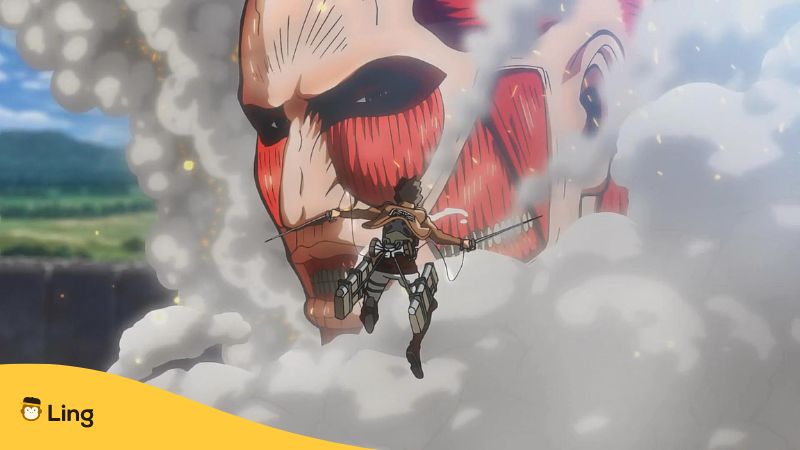
The main theme of every shonen anime is fighting and never giving up, as in Naruto, One Piece, and Attack on Titan. When you’re about to give up, remind yourself, akiramenaide (諦めないで)!
3. Wait A Moment – Chotto Matte (ちょっと待って)
This is another common Japanese phrase that you can hear in every anime. It is the informal version of the phrase chotto matte kudasai (ちょっと待ってください).
4. Thank Goodness – Yokatta (よかった)
You can translate this anime phrase differently, but the closest English equivalents are “Thank God” and “I’m glad.” Alternatively, you can say yokattane (よかったね~), which means “Good for you” in English.
5. Roger, Understood! -Ryoukai (了解)
It is used to indicate that you understand something and you will make the person’s request. It can be used informally with your friends or family! It is an affirmation that means, “yes, got it!”
6. Good Luck! – Ganbatte (頑張って)
This Japanese phrase frequently appears in animes. The verb ganbaru (頑張る), meaning “to do one’s best,” is the root of the word ganbatte (頑張って). The phrase is used to motivate people to do something, and it also means “good luck.”
7. Awesome! – Sugoi (すごい)
Although the Japanese language isn’t gendered, boys use a certain speaking preference, like Japanese first-person pronouns which are perceived as masculine. Boys mainly use sugee (すげえ), and it is super casual. The word stems from sugoi (すごい), but instead of an ending that sounds like “-oi,” they drag the vowel into a long “-ee.”
8. I Can’t Believe It! – Shinjirarenai (信じられない)
You can express your state of shock by saying shinjirarenai (信じられない) alone or add the yo (よ) Japanese particle at the end to emphasize your shock.
9. Take Care! – Kiotsukete (気を付けて)
Simply put, kiotsukete (気を付けて) means “take care” or “be safe.” Since this uses the te-form, it is also a command or request. But in Japanese, these commands are not so strict. It’s like a friendly comment. To make it polite, add kudasai (ください) at the end.
10. Long Time No See! – Hisashiburi (久しぶり)
Hisashiburi (久しぶり) is a commonly used Japanese phrase in anime that means “long time no see” in English. There isn’t a set time span for using this phrase, as it’s highly subjective.
Use this with friends or family. Or, if you want to be polite, you can say お久しぶりです. Adding the お at the beginning and the です at the end makes it more formal!
11. Heart Thumping – Doki-doki (ドキドキ)
This is a Japanese onomatopoeia that describes the sound of your heart thumping. In particular, it’s used when you are nervous or flustered during an interaction with a crush.
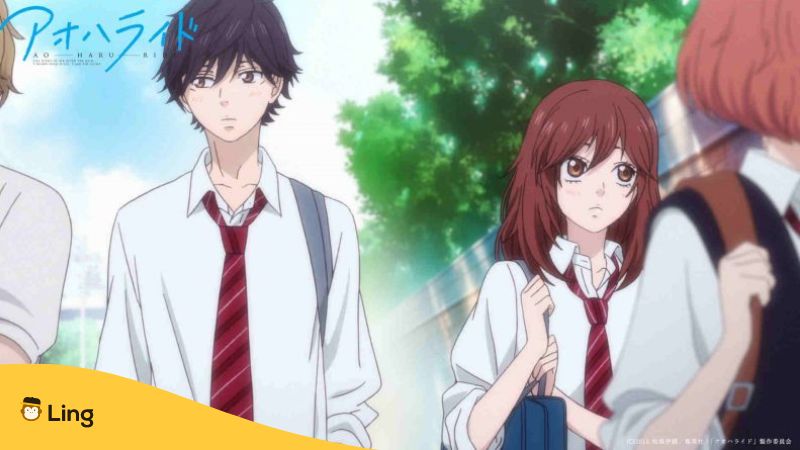
If you watch romantic-comedy anime, you may have heard this multiple times. Japanese people love onomatopoeia and often use repetitive words such as doki-doki.
Other Common Anime Words And Phrases In Japanese
Here is the list of Japanese words and expressions that every anime character says.
| English | Japanese | Romaji | Sound |
|---|---|---|---|
| As usual | 相変わらず | Aikawarazu | |
| To give up | 諦める | Akirameru | |
| Monster | 化物 | Bakemono | |
| It’s nothing | 別に | Betsu Ni | |
| Beauty | 美人 | Bijin | |
| Strength | 力 | Chikara | |
| Fine, okay | 大丈夫 | Daijoubu | |
| Therefore | だから | Dakara | |
| Hey | ほら | Hora | |
| Really? | 本当 | Hontou | |
| Ouch! | 痛い | Itai | |
| Cool | カッコイイ | Kakkoii | |
| Cute | かわいい | Kawaii | |
| To kill | 殺す | Korosu | |
| Really? | まじ | Maji | |
| No way | まさか | Masaka | |
| Everybody | みんな | Minna | |
| Of course | もちろん | Mochiron | |
| I see | なるほど | Naruhodo | |
| Interesting | 面白い | Omoshiroi | |
| Please | お願いします | Onegaishimasu | |
| Roger | 了解 | Ryoukai | |
| To die | 死ぬ | Shinu | |
| Noisy | うるさい | Urusai | |
| To stop | やめる | Yameru | |
| Oh dear | やれやれ | Yare Yare | |
| Yes, I did it! | やった | Yatta | |
| That’s great | よかった | Yokatta | |
| Too bad for you | 残念 | Zannen | |
| Absolutely | 絶対 | Zettai |
Bad Anime Language You Shouldn’t Use In Real Life
As you know, the anime world is not always innocent. You watch countless anime fight scenes and hear many swear words, which you shouldn’t use in everyday life in Japan.
| English | Japanese | Romaji | Sound |
|---|---|---|---|
| Moron | あほ | Aho | |
| That person (rude) | あいつ | Aitsu | |
| Idiot | バカ | Baka | |
| Don’t mess with me | ふざけんな | Fuzaken | |
| Pervert | 変態 | Hentai | |
| You (rude) | 貴様 | Kisama | |
| Shit | くそ | Kuso | |
| You (very rude) | お前 | Omae | |
| None of your business | お前 関係ない | Omae kankei nai | |
| You (extremely rude) | テメー | Temee |
How Do You Say “Anime Phrases” In Japanese?
You can say ‘anime phrases’ in Japanese as:
- Anime no Furēzu (アニメのフレーズ): The common and natural way to say it.
- Anime no Serifu (アニメのセリフ): Specifically refers to lines spoken by characters.
Practical Tips To Learn Japanese Through Anime
- Use Subtitles Wisely: Start with English subtitles, then switch to Japanese subtitles, and finally try watching without any.
- Focus on Common Phrases: Pay attention to everyday expressions like Arigatou – Thank you, Chotto matte – Wait a second, and Daijoubu – It’s okay.
- Repeat and Shadow: Pause and repeat lines out loud to improve pronunciation and intonation.
- Watch Slice-of-Life Anime: Shows like Shirokuma Cafe or Barakamon use practical, real-life vocabulary.
- Take Notes: Write down new words and look up their meanings.
- Use Flashcards: Apps like Anki or Quizlet can help reinforce anime vocabulary.
- Slow Down Playback: Use tools like Netflix’s speed control to listen carefully.
- Mimic Characters: Try to copy the way characters speak Japanese to improve fluency.
- Learn Kanji from Anime Titles: Recognizing kanji in show titles can help with your reading skills.
- Engage with the Community: Join forums or language exchange groups to discuss anime in Japanese.
Frequently Asked Questions About Anime Phrases In Japanese
What Are The Most Iconic Anime Phrases?
Some of the most famous anime phrases include Dattebayo! – “Believe it!” (Naruto), Nani?! – “What?!”, Omae wa mou shindeiru. – “You are already dead.” (Fist of the North Star), and Yare yare daze. – “Good grief.” (JoJo’s Bizarre Adventure). These are often repeated in anime and have become well-known worldwide.
What Are Some Anime Expressions?
Common anime expressions include Sugoi– “Amazing”, Baka – “Idiot”, Kawaii – “Cute,” Uso – “No way”, and Chotto matte – “Wait a second.” These phrases are frequently used by characters to express emotions like excitement, frustration, or surprise.
What Do Anime Characters Usually Say?
Anime characters often say things that match their personality or role. Heroes might say Zettai ni akiramenai! – “I will never give up!” while villains use phrases like Kowakatta? – “Were you scared?” Everyday phrases like Ohayou! – “Good morning!” and Arigatou! – “Thank you!” also appear in many anime.
What Is A Cool Japanese Word In Anime?
A cool Japanese word often heard in anime is Kakko ii (カッコイイ), which means “cool” or “stylish.” Another popular one is Saikou (最高), meaning “the best” or “awesome!” These words are used to describe strong characters, exciting moments, or impressive actions.
Wrapping Up
In this post, we went over several Japanese phrases you’ll commonly see in anime. You probably recognized several of them, but if you didn’t, you now know what words like Yokatta (よかった), Hisashiburi (久しぶり), Betsu Ni (別に), and more mean.
Plus, we gave you a list of other common anime words and phrases, and one with bad language you’ll probably hear often in anime but shouldn’t be using in real life.
You can retake our quiz from the beginning now and see how much you’ve improved. But all that’s really left to do now is to keep learning. Ganbatte! (頑張って)
Start Learning Japanese With Ling!
Learning Japanese should be fun, and with the Ling app, it is!
Our bite-sized lessons make it easy to fit learning into your day, while interactive exercises help you learn kanji, hiragana, and katakana effortlessly.
Want to sound like a native? Ling’s real-world dialogues and pronunciation practice get you to speak with confidence. Plus, with fun challenges, cultural trivia, and slang lessons, you’ll explore the language in a way that keeps you engaged and excited.
Start learning Japanese with the Ling app today!