


If you’re planning an upcoming vacay to Japan or are just straight-up obsessed with the Japanese language and culture, you’ll wanna mark November 23rd in your calendar. That’s when they celebrate Kinrō Kansha no Hi (勤労感謝の日) – translated as the day for Thanksgiving in Japan!
This special national holiday is for showing mad appreciation to all the hard-working hunnies in Japan. Kinda like how Thanksgiving back home gives us a chance to give thanks, be grateful, pig out on some bomb food, and relax with fam and friends.
What Is Kinrō Kansha No Hi?
Labor Thanksgiving Day didn’t originate from those first feast vibes like back in 1621. It actually has roots in ancient Shinto harvest festivals and Buddhist traditions! It’s pretty neat how it brings that OG gratitude energy into the modern day.

When November 23rd rolls around, peeps across Japan take some time to reflect, as well as show some love to the dedicated workers who make the country so dope. We’re talking parades, fireworks shows, chill temple visits, and smashing bento meals with coworkers!
So, if you find yourself exploring Japan near late November, make sure to get hyped for this fire holiday! Join in the festivities any way you can, or just say a cheerful Otsukaresamadeshita (お疲れ様でした) to locals. This is a great way to show them how much you, as a gaijin, know about Japanese culture too!
Ready to learn? Keep scrolling for everything tourists and soon-to-be expats should know about celebrating this special day!
The Origins Of Kinrō Kansha No Hi
Kinrō Kansha no Hi translates directly to Labor Thanksgiving Day in English. It’s a national holiday in Japan celebrated annually on November 23rd, with historical origins dating back over 2,000 years!
The holiday started as an ancient Shinto harvest festival called Niinamesai (新嘗祭), which focused on celebrating the autumn rice harvest. Over centuries, it evolved into a revered event for showing appreciation for each year’s hard work through community feasting, dancing, music, and worship of the crops.
Though the core spirit of gratitude remained, the day was not formally established as Kinrō Kansha no Hi until 1948, post-WWII. The new Constitution expanded workers’ rights, so it became Labor Thanksgiving Day – a holiday specially designed to honor all diligent workers across industries.
In modern times, Labor Thanksgiving Day sees most companies and schools shut down across Japan. Back in the day, families gathered to enjoy holiday dishes and attend public celebrations, holding parades, fireworks, and more for the nation’s hardest workers. Today, the locals are more likely to spend the day visiting temples, joining the Nagano Ebisuko Fireworks Festival, participating in the Nagano Labor Festival, or staying at the local parks along with their family members.
In some schools, they also hold special activities to teach students about the importance of labor and appreciation. But if we’re talking about schools in the suburbs of Tokyo, don’t be surprised to see random elementary school-age children presenting their drawings, letters, and handicrafts to local police officers during this day as well!
Common Food For Thanksgiving In Japan
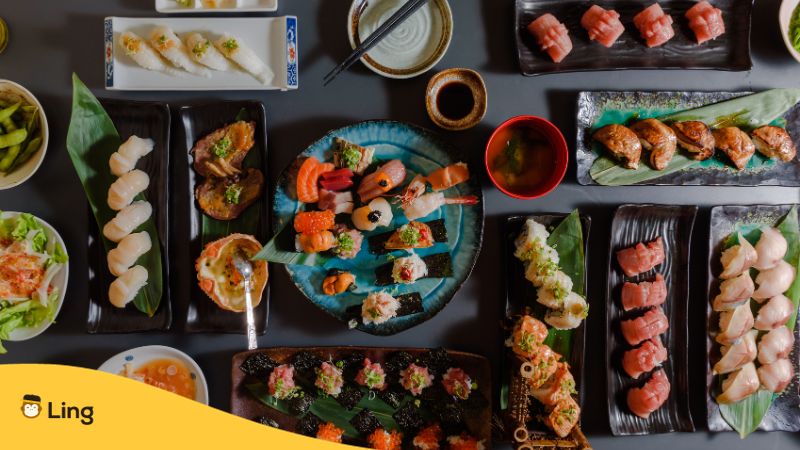
While Kinrō Kansha no Hi is not celebrated with a feast like American Thanksgiving, delicious food still takes center stage! Families across Japan prepare special meals on this day to mark the holiday. Instead of turkey and pumpkin pie, some traditional Japanese cuisine often served on Labor Thanksgiving Day includes:
- Sashimi (刺身) – Thinly sliced raw seafood like tuna or salmon. This fresh delicacy is a popular appetizer or side.
- Tempura (天麩羅) – Seafood like shrimp or vegetables dipped in batter and deep-fried for a crispy treat. An indulgent main dish.
- Sushi (寿司) – Vinegared rice topped or rolled with fish, egg, veggies, and more. A sushi spread makes a visually stunning meal.
- Udon (うどん) – Hot wheat noodles in a savory dashi broth with chops of vegetables or fried tofu. The perfect comforting, slurpable dish.
- Mochi (もち) – Soft, sticky, subtly sweet rice cakes. Mochi makes for a light dessert or snack to nibble on.
While the flavors are completely different from a turkey feast, Japanese cuisine is a delightful way to honor Labor Thanksgiving Day based on regional Japanese food traditions.
The Difference Between Japan And Western Thanksgiving
While Kinrō Kansha no Hi translates directly to ‘Labor Thanksgiving Day,’ it has some critical differences from the Thanksgiving holiday celebrated in Western countries like the United States and Canada.
The main contrast is that Labor Thanksgiving Day is focused especially on honoring diligent workers rather than generally giving thanks for the autumn harvest. Japanese families do not follow traditions like eating turkey, watching football, or shopping sales on the day after, either.
The holiday also has more historical roots in rice harvesting festivals from ancient Shintoism rather than any association with early Protestant settlers. Activities often lean more towards temple visits, public parades, and reflective time off rather than large home feasts.
There are also no grand stories of cooperation between indigenous groups and European colonists that are told about the first Thanksgiving meal in North American history. Kinrō Kansha no Hi sprung up differently as an evolution of centuries of rice veneration before being formally established to support workers.
While both cultural holidays value community, gratitude, special dishes, and quality time with loved ones, Japan’s Labor Thanksgiving holiday has shaped those elements around respecting workers and nourishing the country’s prosperity. The focus lies more on labor than on general blessings.
At their core, however, both holidays remind societies to slow down, be thankful, and show appreciation, no matter the history or traditions!

Japanese Thanksgiving Phrases
Planning to be in Japan for Kinrō Kansha no Hi on November 23rd? You’ll want to know some of these helpful holiday phrases to better connect with locals on this special day celebrating workers’ diligent efforts:
- Thank you – Arigatō gozaimasu (ありがとうございます) – The standard polite way of saying “thank you” in Japanese. Great for showing everyday gratitude.
- Thank you very much. – Dōmo arigatō gozaimasu (どうもありがとうございます) – Use to emphasize your appreciation.
- Thank you for your hard work. – Otsukaresamadeshita (お疲れ様でした ) – Perfect for the labor holiday!
- Thanks for everything. – Iroiro arigatō gozaimashita (いろいろありがとうございました ) – Says this to express broad gratitude.
- Good work! – Gokurousama (ご苦労様) – Wish someone recognition for their efforts.
There are also more formal phrases travelers may hear locals using:
- Special thanks for honored guests/hosts. – Osore Irimasu (御礼申し上げます)
- Deep gratitude for someone of lower status. – Haisha Moushiagemasu (拝謝申し上げます)
Use these wonderful Japanese Thanksgiving phrases to share meaningful appreciation between cultures in celebrating the Kinrō Kansha no Hi!
How Do You Say ‘Thanksgiving’ In Japanese?
The general word for a Thanksgiving festival in Japanese is Kanshasai (感謝祭).
However, Kinrō Kansha no Hi is the name of the official national holiday celebrated in November, known as Labor Thanksgiving Day.
Vocabulary Related To Thanksgiving In Japan
Visiting Japan during the holiday and want to sound like a local? Here’s a quick cheat sheet of essential words and phrases related to this day:
| English | Japanese | Transliteration | Sound |
|---|---|---|---|
| Thanksgiving | 感謝祭 | Kanshasai | |
| Labor Thanksgiving Day | 勤労感謝の日 | Kinrō Kansha no Hi | |
| Holiday | 祝日 | Shukujitsu | |
| Work / Labor | 労働 | Rōdō | |
| Gratitude / Thanks | 感謝 | Kansha | |
| Thank you | ありがとうございます | Arigatō gozaimasu | |
| Thank you for your hard work | お疲れ様でした | Otsukaresama deshita | |
| Rice | 米 | Kome | |
| Celebration | お祝い | Oiwai | |
| Fireworks | 花火 | Hanabi | |
| Festival | 祭り | Matsuri | |
| Ceremony | 儀式 | Gishiki |
Traveler Tips for Joining The Fun
So, you’re lucky enough to be in Japan for the holiday? Here are a few simple and respectful ways you can join in on the gratitude.
- Visit a Local Temple or Shrine: This is one of the most common ways Japanese people observe the day, so head to a nearby temple or shrine to see locals offering prayers of thanks for the year’s harvest and their work.
- Check for Local Events: Keep an eye out for community festivals or parades, especially in smaller cities and towns. Nagano, for example, is famous for its Ebisuko Fireworks Festival around this time.
- Say Otsukaresama deshita (お疲れ様でした): If you interact with any hotel staff, restaurant workers, or shopkeepers on the holiday, a cheerful Otsukaresama deshita is the perfect phrase.
- Enjoy a Nice Meal: While there’s no specific “Thanksgiving turkey,” follow the local custom of enjoying a special meal. It’s the perfect excuse to book that fancy dinner!
- Be Prepared for Closures: Remember, it’s a national holiday. Many offices, banks, and some smaller local shops will be closed. Major department stores and attractions in big cities will likely be open, but it’s always smart to check ahead.
Frequently Asked Questions About Thanksgiving In Japan
Is There Thanksgiving In Japan?
Yes, Japan has a national holiday called Labor Thanksgiving Day (Kinrō Kansha no Hi), celebrated every year on November 23. While its name translates to “Thanksgiving,” its focus is on honoring workers and celebrating production, rather than a historical harvest feast with pilgrims.
How Is Japanese Thanksgiving Different From American Thanksgiving?
The main difference is the focus: Japan’s holiday honors workers and labor, while America’s commemorates a historical harvest feast. This means you won’t typically find large family feasts with turkey in Japan. Instead, it’s often a quiet day of rest, or a time for community events and children to thank local workers like police officers and firefighters.
Is Labor Thanksgiving Day A Good Time To Visit Japan?
It can be a nice time to visit. Since it’s a national holiday, some offices and schools are closed, but most tourist attractions, shops, and restaurants remain open. It’s a great opportunity to experience a local holiday without the major travel disruptions seen during holidays like Golden Week.
Wrapping Up
Japan’s Labor Thanksgiving Day, or Kinrō Kansha no Hi, is a beautiful holiday with ancient roots that’s all about showing gratitude for hard work and the year’s harvest. It’s not about a giant turkey feast, but it’s a perfect excuse to enjoy delicious Japanese cuisine like sushi and tempura.
Whether you use our traveler tips to visit a local shrine or impress someone with a heartfelt Otsukaresama deshita, you now have everything you need to appreciate this special day. It’s a unique cultural experience that highlights Japan’s values of community and respect.
Ready To Join The Japanese Labor Thanksgiving Day?
If you want to travel to Japan and immerse yourself in traditions like Kinrō Kansha no Hi, first build language and cultural fluency! The Ling app makes learning Japanese whenever and wherever easy with fun, interactive audio lessons and study tools.
You’ll find audio by native speakers, finger tracing practice for Japanese writing, instant feedback on your pronunciation, and more. There’s also Banana Points, streaks, and leaderboards to keep you motivated, and several review features so you don’t forget what you’ve learned.
So don’t wait any longer, download the Ling app today and start your Japanese learning journey!