


Whenever I mention the Japanese Setsubun (節分) festival and its wacky soybean-throwing rituals to travelers headed to Japan in early February, I’m always met with bemused smiles and questions about what exactly this little-known holiday is all about. But lemme give you the primer: marking the beginning of spring each year, Japanese Setsubun celebrations drive out lingering evil spirits and welcome fresh starts, renewed luck, and good fortune for the year ahead.
In this beginner’s guide to one of Japan’s overlooked festivities, I’ll walk you through everything you need to know about the Setsubun events and the best Japanese phrases for travelers. Ready? Let’s begin!
What Is The Japanese Setsubun Festival?
If you’ve ever wanted to shout at invisible demons while wildly flinging soybeans across a room, then get yourself to Japan’s action-packed Setsubun festival. Setsubun marks the beginning of spring each year, falling on February 2nd, 3rd, or 4th, depending on the lunar calendar.

While Setsubun might sound a bit wacky to newcomers, this lively little holiday has been going strong for centuries. Its name translates to “seasonal division,” referencing the symbolic separation between winter’s darkness and spring’s fresh starts. Originally, Japanese people would spend this transitional period performing rituals to banish lingering evil spirits and purification ceremonies to welcome renewed fortune into their homes in preparation for spring.
Around the 13th century, popular rituals started taking shape – people would burn pungent sardine heads, crash drums loudly, and decorate entries with fish heads and sacred leaves to scare evil spirits away. While you likely won’t see many ornamental fish heads displayed these days, Setsubun customs have endured the test of time.
Nowadays, the two most beloved Setsubun traditions are the flinging of roasted soybeans called mamemaki (豆撒き) and eating lucky direction sushi roll or eho-maki (恵方巻き). During mamemaki, roasted beans are thrown wildly indoors and at temples while chanting “Oni wa soto! Fuku wa uchi!” (鬼は外!福は内!) or “Out with demons! In with happiness!”
What Is Mamemaki (豆撒き)?
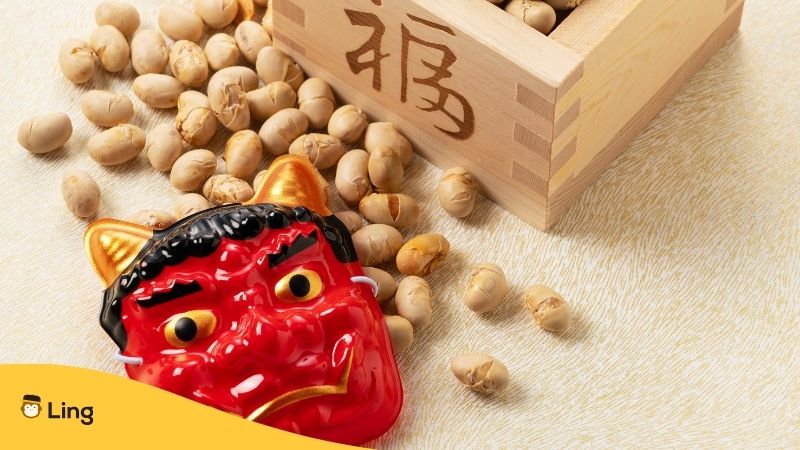
Once those demons start knocking on doors as they roam the streets each Setsubun, it’s time to grab your soybeans and start flinging! The lively ritual of tossing roasted beans is called mamemaki, and it’s the headlining event of the Japanese Setsubun festival.
Mame literally translates to bean, so mamemaki signifies the scattering of beans to banish demons and welcome in happiness and good luck for the new year. Legend promises that catching and eating the amount of beans matching your age will bring an exceptionally lucky year too!
According to the locals, Japanese families usually assign the male whose Chinese zodiac animal matches that year’s zodiac to be the major bean-throwing commander. In some households, fathers will even dress up as red-faced demons and gleefully play the role while kids throw beans at them to ritualistically drive the monster and past year’s misfortunes away.
Why Are Soybeans Used For Setsubun?
Within the spiritual Shinto tradition, soybeans are revered as the second most auspicious food after rice. Their significance stems from being nutritionally dense, their long storage life, and soy’s role as an essential dietary staple. Much like rice, soybeans represent bounty, health, and life’s provisions.
Beyond being a lucky symbolic food, though, soybeans have another advantage – they’re also bigger and heartier than delicate grains of rice. When evil spirits start lurking around homes each Setsubun, Japanese families need an ingredient that packs some demon-fighting punch! Soybeans became the choice missile for literally casting misfortune out the door.
What Is Ehomaki (恵方巻)?
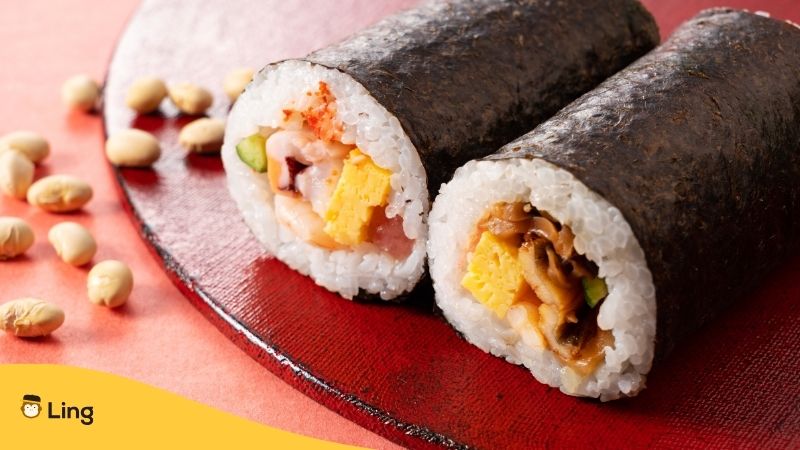
Once you’ve finished flinging soybeans during the lively mamemaki ritual, it’s time to sit down and feast on some fortunate sushi for Setsubun – ehomaki! These thick, uncut sushi rolls bursting with symbolic ingredients are another favorite Japanese food tradition believed to usher in luck and prosperity for the coming year.
Ehomaki simply translates to “lucky direction roll,” as they are always eaten while facing the year’s appointed fortunate direction. The direction shifts annually and is decided by geomancy experts according to the lunar calendar. Tradition holds that silently consuming the entire ehomaki roll in one direction solidifies blessings for the next 12 months!
In addition to lucky direction dining, the ingredients tucked within ehomaki hold significance too. Classic recipes call for seven fillings to represent the Seven Deities of Good Fortune, known in Japan as Shichifukujin. While the ingredients vary by region and taste, it’s the lucky number seven that matters most when stuffing an emaki full of fresh fish, egg creations, vegetables, and more.
Easy Japanese Words For Setsubun
Want to celebrate Setsubun like a true local? Mastering a few keywords and phrases will level up your soybean-throwing skills and have you dining on fortune-filled sushi in no time!
Here are 5 must-know Setsubun terms to get your vocabulary started!
Oni (鬼) – Demon
Setsubun marks the time when invisible oni or folklore demons arrive to wreak havoc. Better pelt them with soybeans quickly!
Mamemaki (豆撒き)- Throwing Beans
As you scoop up handfuls of beans to wildly toss across the room, you’re officially doing mamemaki!
Fuku (福)- Fortune/Good Luck
Make sure to wish your family and friends fuku or blessings of good luck when the new spring season arrives after Setsubun.
Ehomaki (恵方巻)- Lucky Direction Roll
This special thick sushi roll stuffed with 7 symbolic ingredients will have your incoming year brimming with eho or good fortune!
Oni wa soto! Fuku wa uchi! (鬼は外!福は内!) – Demons out, Fortune in!
Chant this signature phrase and the Setsubun mantra as you drive those demons away and beckon in fortune one soybean at a time.
Even More Japanese Vocabulary For Setsubun
Want to learn more? Here’s a quick list of other key words and phrases you’ll hear flying around in the Japanese Setsubun festival (just like those soybeans!).
| English | Japanese | Transliteration | Audio |
|---|---|---|---|
| Setsubun (the holiday) | 節分 | Setsubun | |
| Roasted soybean | 福豆 | Fuku mame | |
| Lucky direction (of the year) | 恵方 | Ehō | |
| Shrine | 神社 | Jinja | |
| Temple (Buddhist) | お寺 | O-tera | |
| The Bean-Thrower (often a celeb at big events) | 豆撒き役 | Mamemaki-yaku | |
| Sardine head (traditional decoration) | 柊鰯 | Hiiragi-iwashi | |
| Holly leaves (used with the sardine head) | 柊 | Hiiragi | |
| To throw, to scatter | 撒く | Maku | |
| To eat | 食べる | Taberu | |
| Spring | 春 | Haru | |
| Purification | お祓い | O-harai | |
| It’s delicious! | 美味しい! | Oishii! | |
| That was fun! | 楽しかった! | Tanoshikatta! |
Tips To Celebrate Setsubun In Japan
If you’re in Japan for Setsubun and want to join the fun, here are a few practical tips to make the most of it.
- Head to a Major Shrine or Temple. Places like Sensoji Temple in Tokyo, Fushimi Inari in Kyoto, or Ikuta Shrine in Kobe hold huge festivals with celebrities or sumo wrestlers as the official bean-throwers. Get there early; it gets packed.
- Buy a Bag of Fuku Mame. You can find small bags of roasted soybeans (fuku mame – 福豆) at any convenience store, supermarket, or even train station kiosk in the days leading up to Setsubun. Grab one to participate in an event or just to snack on for luck.
- Eat Your Ehomaki the Right Way. Don’t just buy the roll from a sushi shop or supermarket. Find out the year’s ehō (lucky direction) with a quick online search. When you eat, face that direction, make a silent wish, and don’t talk until you finish the whole roll in one go. That’s the tradition!
- Look for the Hiiragi-Iwashi. Keep an eye on doorways of traditional homes, restaurants, or shops. You might spot the sardine head and holly leaves decoration (hiiragi-iwashi) meant to ward off evil spirits. It’s a cool, traditional detail most tourists miss.
- Join the Chant! When the bean-throwing starts, everyone yells “Oni wa soto! Fuku wa uchi!” Don’t worry about perfect Japanese pronunciation, just shout it out with everyone else.
Common Mistakes To Avoid During Setsubun
Even with the best intentions, it’s easy to miss a cultural nuance. To help you celebrate smoothly, here are a few common slip-ups to avoid.
- Throwing Raw or Uncooked Beans. This is the big one. You must use roasted soybeans (iri mame or fuku mame). Raw beans can sprout if scattered, which symbolizes something taking root; exactly the opposite of driving away evil. Always buy the pre-packaged roasted ones.
- Talking While Eating Your Ehomaki. The rule is to eat the whole roll in silence while facing the lucky direction (ehō) and making a wish. Chatting or stopping halfway is said to break the luck.
- Throwing Beans At People (Aggressively). At home, it’s a playful family ritual. At a public event, you’re catching beans thrown by the official. Don’t start pelting fellow attendees, it’s not a food fight.
- Saying “Oni wa naka! Fuku wa soto!” You might get the chant backwards in the excitement. Remember: demons out (oni wa soto), fortune in (fuku wa uchi). Getting it backwards is like inviting the bad luck inside!
Frequently Asked Questions About Setsubun
Is Setsubun A National Holiday In Japan?
What Do Kids Do During Setsubun?
Kids are the stars of the Setsubun celebration at home. Their main jobs are to help throw the roasted soybeans (mamemaki) to chase away the oni (demon) and then to try and eat their ehomaki sushi roll in one go.
Often, a parent or older sibling will play the role of the oni, wearing a simple mask, and the kids gleefully shout “Oni wa soto!” while throwing beans at them to drive the “misfortune” out of the house.
What Do You Say During Setsubun?
The main phrase you say is “Oni wa soto! Fuku wa uchi!” which means “Demons out! Good fortune in!” You shout this chant loudly and with spirit during the mamemaki (bean-throwing) ritual.
You say it once as you throw beans inside your home, and again as you throw some beans outside the front door (or just out a window) to really banish the bad luck. It’s the heart of the whole celebration.
Quick Setsubun Recap
In this post, we’ve covered everything from Setsubun’s historical roots to its modern traditions. You’re now equipped with the knowledge to join in the two main events: the spirited bean-throwing ritual of mamemaki to chase away demons, and the eating of the ehomaki sushi roll to lock in your luck for the year. As you now know, the key is knowing the chant “Oni wa soto! Fuku wa uchi!”
Whether you’re catching beans at a packed temple in Japan, playing the oni for laughing kids at home, or quietly facing the lucky direction with your sushi, you’re participating in a centuries-old wish for health and happiness.
Ready To Join The Traditional Bean Throwing Event?
Now that you know about Setsubun customs like mamemaki and understand lucky Japanese vocabulary too, you can embrace the holiday’s playful purification spirit anywhere Japan’s culture takes you next.
And if you’d like to keep expanding your Japanese language skills beyond my Setsubun starter words, I highly recommend apps like Ling.
The Ling app helps demystify one of the world’s most intricate languages through fun, interactive lessons, native-speaker audio, conversational practice, several review features, and much more. It’s a great next step to unlock even more of Japan’s cultural beauty as you travel or live abroad!
So download the Ling app and start learning Japanese today. You’ll surely be able to master some phrases before Setsubun!