


Beauty is everywhere. You can find it in nature, people, and objects. In Japan, there is no single word for beautiful. The Japanese language has many ways to describe it, capturing feelings that other languages cannot.
This guide shows all the ways to say beautiful in Japanese. Learning them will make you see how much nuance the language can convey, and you might wish your own language could do the same.
What Is The Japanese Word For Beautiful?
There isn’t a single word for “beautiful” in Japanese. The two most popular words are kirei (綺麗) and utsukushii (美しい), and their use depends on whether you’re emphasizing neatness, prettiness, or deep, sophisticated beauty.

Japanese concepts of beauty have a long history. According to History of Beauty Standards in Japan Since Edo Period, ideals of attractiveness have evolved from the refined elegance of the Edo period to the modern emphasis on charm and neatness.
So, it’s important to keep in mind that these words are used depending on context, like describing people, places, nature, experiences, art, objects, or animals. Let’s see how they work!
What Does Kirei (綺麗) Mean?
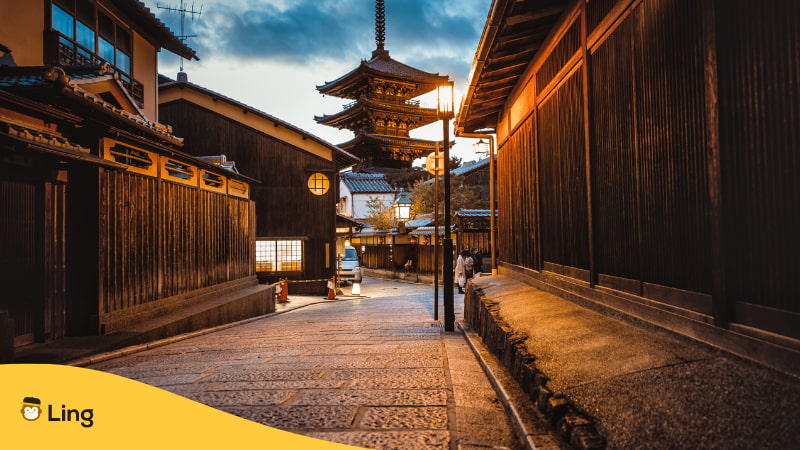
Kirei (綺麗)means neat, clean, or beautiful. It’s usually used to describe places or things that are beautiful, pretty, clean, or neat. It is used when giving a compliment about a place or an object. It can be used on its own as an exclamation. If you walk into a beautifully decorated room or see a stunning sunset, you can simply say Kirei! to mean “Beautiful!”
This is a ‘na‘ adjective, so it becomes kireina (綺麗な) when it directly modifies a noun. In simple sentences, it appears as kirei (綺麗) or kirei desu (綺麗です).
Here are two examples:
- Kyoto is beautiful – Kyoto wa kirei (京都は綺麗)
In this sentence, kirei (綺麗) describes the beautiful appearance of the city.
- Your home is clean – Anata no ie wa kirei desu (あなたの家は綺麗です)
Here, kirei (綺麗) expresses the beauty of the home’s cleanliness. It can mean both ‘beautiful’ and ‘clean,’ depending on the context.
What Does Utsukushii (美しい) Mean?
Utsukushii (美しい) means beautiful in a deep and refined sense. It does not mean ‘clean’ or ‘tidy’. It is an ‘i‘ adjective used to describe profound beauty, and it can refer to people, places, nature, art, or even a voice. Unlike Kirei (綺麗), it focuses on inner and outer beauty together. It sounds more sophisticated and is not used casually in everyday reactions. Let’s see how it works!
Examples:
- Kyoto is a beautiful place – Kyoto wa utsukushii basho desu (京都は美しい場所です).
Here, utsukushii (美しい) describes Kyoto’s appearance, atmosphere, and cultural depth as something genuinely beautiful.
- She sang with a very beautiful voice-Kanojo wa totemo utsukushii koe de utaimashita (彼女はとても美しい声で歌いました).
In this sentence, utsukushii (美しい) describes a voice that is not only pleasant but also emotionally moving and graceful.
Use utsukushii (美しい) carefully. It carries more weight than the English word ‘beautiful’ and is reserved for moments that feel special or deeply meaningful.
How To Say ‘You Are Beautiful’ To A Woman In Japanese?
To tell a woman she is beautiful in Japanese, the most accurate phrase is:
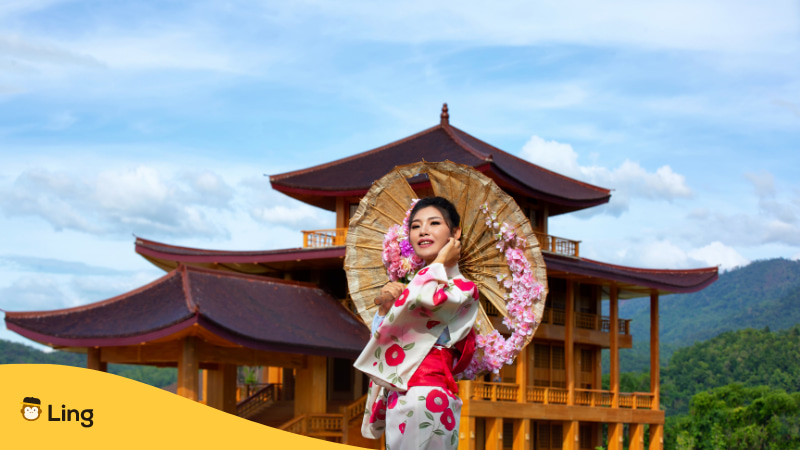
- You are beautiful – anata wa utsukushii desu (あなたは美しいです)
This expression is strong and emotional. Use it only when you genuinely mean that someone is beautiful inside and out. It is not casual and is typically reserved for someone you deeply love or admire.
What Is A More Natural Way To Call A Woman ‘Beautiful’ In Japanese?
In everyday conversation, Japanese speakers are more likely to use:
- Beautiful person/woman – bijin (美人)
Bijin (美人) refers to outward physical beauty and is the most common term used to describe an attractive woman.
Example:
- She is a beautiful woman-Kanojo wa bijin desu (彼女は美人です).
How Do You Tell A Girl She’s Beautiful In Japanese?
Japanese vocabulary changes with age, so it is distinguished by age.
- Beautiful girl – bishojo (美少女)
Bishojo refers to a beautiful young girl and also focuses on appearance.
How Do You Say ‘Pretty’ In Japanese?
If you want something softer and more natural than “beautiful,” use the word pretty-kawaii (可愛い). It means cute, pretty, lovely, or charming. It is extremely common and widely used in daily Japanese.
Examples:
- You are pretty – anata wa kawaii ne (かわいいね).
If you want to call someone adorable, you can say :
- You are really cute – anata wa hontou ni kawaii yo (あなたは本当に可愛いよ).
- Your cat is so cute – Anata no neko wa totemo (あなたの猫はとても可愛いです).
As you can see, the word kawaii is versatile and can describe people, animals, outfits, or even objects. It is far more commonly used than utsukushii in everyday conversation.

How Do You Say ‘You Are Handsome’ To Men In Japanese?
In most cultures, men and boys would be taken aback by being called beautiful, pretty, or cute, and it’s the same in Japanese culture. It’s more appropriate to call a man ‘handsome or good-looking,’ rather than beautiful in Japanese.
To tell a man he is handsome in Japanese, you can say:
- You are handsome – Anata wa hansamudesu (あなたはハンサムです).
How To Tell A Man Or Boy He Is Cool Or Good-Looking In Japanese?
If you want to say he is a good-looking man, you can use the word Ikemen (イケメン)
This term is used casually, especially by younger generations, to describe attractive men.
On the other hand, if you want to say he is ‘cool’, call him Kakko ii (カッコいい).
Other Ways To Say Beautiful In Japanese
Now let’s learn even more ways to say beautiful in Japanese.
| English | Japanese | Romanization | Sound |
|---|---|---|---|
| Gorgeous | 豪華 | gouka | |
| That woman’s hair is gorgeous | その女性の髪はゴージャスです | Sono josei no kami wa gōjasu desu | |
| She is gorgeous | 彼女はゴージャスです | Kanojo wa gōjasu desu | |
| This resort is gorgeous | このリゾートはゴージャスです | Kono rizōto wa gōjasu desu | |
| Elegant | 上品 | jouhin | |
| It’s so elegant | 上品だね | Jouhin da ne | |
| That ring is elegant | その指輪は上品です | Sono yubiwa wa jouhin desu | |
| Lovely | 素敵 | suteki | |
| It was such a lovely trip | 素敵な旅だったね | Sutekina tabi datta ne | |
| You look lovely | あなたは素敵に見えます | Anata wa suteki ni miemasu | |
| What a lovely necklace | なんて素敵なネックレス | Nante sutekina nekkuresu |
Tips For Learning Japanese Vocabulary
- Start by memorizing the core words like kirei (綺麗), utsukushii (美しい), hansamu (ハンサム), andkawaii (可愛い).
- Practice using each word in context with people, places, or objects.
- Listen to native speakers and notice when words are used casually or formally.
- Try saying the words in short phrases or questions to get comfortable with how they sound in conversation.
- Keep a Japanese vocabulary and phrases journal with examples to review regularly.
FAQs About Saying Beautiful In Japanese
How Do You Say ‘Gorgeous’ In Japanese?
You can say gōjasu (ゴージャス) to describe someone or something that looks gorgeous, flashy, or glamorous.
What Does Shibui Mean?
Shibui (渋い) describes understated, subtle beauty. Something elegant, refined, and quietly impressive.
What’s The Difference Between Kirei And Utsukushii?
Kirei (綺麗) describes something or someone that looks neat, clean, or pretty, like a tidy room or a beautiful city view. Utsukushii (美しい) expresses deep, moving beauty, often used for people, art, or scenery that impresses both visually and emotionally.
Final Thoughts On The Different Ways To Say Beautiful In Japanese
In this article, we have seen the main ways to express beauty in Japanese and how to choose the right word depending on context and nuance. Kirei – 綺麗 (きれい) is used for everyday beauty like clean places or pretty things, Utsukushii – 美しい (うつくしい) describes deep or moving beauty, and Bijin – 美人 (びじん) is used to compliment an attractive woman. By using these words correctly, you can express both casual and sophisticated forms of beauty in Japanese.
Learn Japanese With The Ling App
There are many ways to express beauty in Japanese, and the best way to remember them is to learn Japanese naturally through everyday practice. The Ling app lets you listen, speak, track your progress, and practice at your own pace.
You can explore over 70 languages, including Japanese, directly from your phone, making learning convenient and fun. Download Ling from the Play Store or App Store and start speaking Japanese with confidence soon!