

Thai jokes: มุก (múk), are built on wordplay, phonetics, and one core cultural value: สนุก (sà-nùk), the Thai philosophy of finding fun in everything. A good Thai pun doesn’t need to make sense. What makes it land is the shared spirit of lightness, and understanding that spirit is what makes all the difference between someone who “knows Thai” and someone a Thai family genuinely warms to.
Here’s a quick example: ask a Thai person สัตว์อะไรช้าที่สุด? (“What’s the slowest animal?”) and the answer — ก็ลีลา (“well… it moves slowly”) — is a play on กอริลล่า (gorilla)! There’s no logic required at all, that’s the whole point!
So if you have Thai friends, you live in in Thailand, you’re visiting or you’re in love with someone from Thailand, you’ll quickly realize that connecting with their heart often means connecting with their culture.

In Thailand, humor is a beautiful, essential part of daily life, it’s how people show warmth, build trust, and welcome others into their world.Thai people grow up surrounded by laughter. It’s woven into every conversation, whether between family members at the dinner table or friends chatting at a street stall.
From an early age, Thais are encouraged not to take life too seriously, to slow down, relax, and find joy even in the smallest moments. That’s why learning how to joke in Thai isn’t just a fun party trick, it’s a heartfelt way to show your dedication, break the ice with their family, and be truly seen as part of their inner circle.
Jokes in Thailand aren’t like English jokes! In English, humor often relies on complex setups, clever context, or shared cultural knowledge, like “walks into a bar” stories or classic knock-knock jokes.
Thai jokes, on the other hand, are simple, playful, and built on pure wordplay and phonetics. It’s all about how words sound similar, twist into something silly, or take on a completely unexpected meaning.
This guide covers the real jokes (with full breakdowns), the sanuk cultural philosophy behind Thai humor, how hierarchy shapes who gets to be funny, and the mistakes that make foreigners accidentally awkward. Whether you’re learning Thai to connect with your Thai partner’s family or navigating daily life in Chiang Mai or anywhere else in Thailand, this is the cultural layer no phrasebook covers.

Puns And Wordplay-Inspired Thai Jokes
1. ประเทศอะไร ไม่สามารถดูทีวีได้ (Bprà Têet À Rai Mâi Sǎa Mâat Duu Tii Wii Dâi)
Question:
ประเทศอะไร ไม่สามารถดูทีวีได้
(bprà têet à rai mâi sǎa mâat duu tii wii dâi)
“Which country can’t watch TV?”
Answer:
จอดำ
(jɔɔ dam)
“black screen”
This joke plays with the sound of the country name “Jordan” and twists it into a completely different meaning in Thai.
- จอ (jɔɔ) means “screen.”
- ดำ (dam) means “black.”
Together, จอดำ(jɔɔ dam) literally means “black screen,” which is what happens when a TV loses its signal and the screen goes blank in Thailand.
The humor comes from making “Jordan” sound like จอดำ (jɔɔ dam), associating a real-world country with something broken or non-functional.
It’s playful because the audience immediately pictures a TV that’s permanently black – just like saying Jordan can’t watch TV!
Fun fact: In Thailand, จอดำ (jɔɔ dam) is a common term when there’s a technical issue with broadcasting, especially on older TVs. So, it’s a relatable and funny twist for native speakers.
2. จังหวัดอะไรร้อนหลัง (Jang Wàt À Rai Rɔ́ɔn Lǎng)
Question:
จังหวัดอะไรร้อนหลัง
จังหวัดอะไรร้อนหลั
(jang wàt à rai rɔ́ɔn lǎng)
“Which Thai province worries about their back getting burned?”
Answer:
นอนทับบุหรี่
(nɔɔn tháp bù rìi)
“lying on a cigarette”
This joke twists the name of the province Nonthaburi (นนทบุรี) into a funny image:
- นอน (nɔɔn) means “to lie down.”
- ทับ (tháp) means “to press down” or “to be on top of.”
- บุหรี่ (bù rìi) means “cigarette.”
So, นอนทับบุหรี่ (nɔɔn tháp bù rìi) literally means “lying on a cigarette,” which would definitely burn your back — hence the ร้อนหลัง (hot back) part of the question!
The laughter comes because นนทบุรี (nɔn thá bù rii) and “นอนทับบุหรี่ (nɔɔn tháp bù rìi) sound very close phonetically, especially when spoken quickly.
Thais love jokes that involve “forced associations” between unrelated words just based on their similar sounds, even when the resulting sentence is nonsensical.
The sillier the image (someone lying on a cigarette and getting burned), the funnier!
3. ประเทศอะไร ใส่ของได้เยอะ (Bprà Têet À Rai Sài Kɔ̌ɔng Dâi Yə́)
Question:
ประเทศอะไร ใส่ของได้เยอะ
(bprà têet à rai sài kɔ̌ɔng dâi yə́)
“Which country can hold the most stuff?”
Answer:
ตะกร้า
(dtà grâa)
“Basket”
(Sounds similar to Qatar)
This pun transforms the country name Qatar กาตาร์ (gaa taar) into basket ตะกร้า (dtà grâa) :
- ตะกร้า (dtà grâa) means “basket” — something used to carry a lot of items.
This is a classic example of Thai jokes where even a tiny Thai pronunciation similarity is enough to create a pun.
Precision is less important than the playful leap of imagination from country names in Thai to funny images (basket full of stuff).
4. สัตว์อะไร ร้องไห้แค่เดือนเดียว (Sàt À Rai Rɔ́ɔng Hâi Kɛ̂ɛ Dʉan Diao)
Question:
สัตว์อะไร ร้องไห้แค่เดือนเดียว
(sàt à rai rɔ́ɔng hâi kɛ̂ɛ dʉan diao)
“What animal cries for only one month?”
Answer:
กุ้งตุลาร้องไห้
(gûng dtù laa rɔ́ɔng hâi)
“Prawn cries in October”
(Twisted from กุ้งกุลาร้องไห้ (gûng gù laa rɔ́ɔng hâi) – raw marinated Thai tiger prawns)
กุ้งกุลาร้องไห้ (gûng gù laa rɔ́ɔng hâi) is the name of an authentic Thai dish, often made from raw marinated tiger prawns. The name literally translates to “Gula Shrimp that cries.”
- กุ้ง (gûng) means “prawn.”
- กุลา (gù laa) is the species of the prawn – Thai river prawns.
- ร้องไห้ (rɔ́ɔng hâi) literally means “to cry” but here it is used to describe the Thai raw meat marination method; “raw-marinated”.
Now, swap กุลา (gù laa) with ตุลา (dtù laa) — (October).
The shrimp isn’t crying because of hardship… It’s crying in October!
- ตุลา (dtù laa) is the short name for October (ตุลาคม – dtù laa kom) .
Thailand’s love for puns often involves slight mispronunciations and blends of cultural references, animals, and time (months, days).
Additionally, emotional imagery, such as crying (even for a shrimp), can be both touching and humorous to Thai people.

What Is Sanuk? The Cultural Philosophy Behind Thai Humor
Thai jokes don’t exist in a vacuum, they come from สนุก (sà-nùk), one of the most important cultural values in Thailand.
Sanuk isn’t just a word for “fun.” It’s a worldview. In Thai culture, any activity — work, learning a language, waiting in traffic,should have an element of sanuk to it. If something isn’t sanuk, Thais will find a way to make it so, or they’ll disengage. This is why Thai humor tends toward the lighthearted, absurd, and playful rather than dark or confrontational.
Linguist and Thai culture researcher Cleo Odzer described Thailand’s pervasive humor culture as a social lubricant, a way to reduce friction, dissolve awkwardness, and signal that someone is a good person to be around. When you laugh genuinely at a Thai pun, even a terrible one, you’re demonstrating sanuk — and that earns you real social credit.
Three core characteristics of sanuk humor:
1. Warmth over wit. Unlike Western stand-up comedy that often “punches up” at power or “punches down” at the unlucky, Thai humor tends to punch sideways — among equals, between friends, within shared experiences. The goal is warmth, not cleverness.
2. Sound over sense. Thai is a tonal language with 5 tones, which means any given syllable can have multiple meanings depending on how it’s spoken. Thai humor exploits this constantly — a single mispronounced tone turns one word into something completely different, and the gap between those two meanings is where the joke lives.
3. Absurdity as acceptance. When a joke doesn’t make sense, that’s often the point. Laughing at something illogical together signals openness and easygoing trust — the social equivalent of saying “I’m not taking myself too seriously.”
Cultural note: Sanuk-driven humor almost never targets religion, the monarchy, or personal tragedies. These are serious domains in Thai life, and jokes that brush against them can cause real offense, even if the intention was light. Foreigners who attempt edgy “Western-style” dark humor in Thai social settings often misread the room.
Bangkok vs. Regional Humor: It’s Not All The Same
Thailand’s humor isn’t monolithic. Bangkok’s cosmopolitan comedy scene (stand-up clubs, TV satire, social media) is distinct from the traditional humor you’ll encounter in rural Isan, Northern Thai villages, or Southern coastal towns. Let’s breakdown jokes depending on the Thai dialects:
Bangkok (Central Thai): More wordplay-heavy, more influenced by pop culture, TV comedy shows, and internet trends. The “555” online laugh and social media muk jokes originate here. Bangkok humor is fast, urban, and often bilingual — Thai-English hybrid puns are common.
Northern Thailand (คนเมือง / Khon Mueang): The Northern Thai dialect (Kham Mueang) has its own comic traditions — slower-paced, more narrative, often tied to regional folklore and agricultural life. A joke that lands brilliantly in Chiang Mai might not scan in Bangkok, simply because the wordplay depends on Kham Mueang phonetics.
Isan (Northeastern Thailand): Isan humor, shaped by Lao-influenced dialects, tends toward earthy storytelling, self-deprecating farming humor, and a particular form of banter called phut len (พูดเล่น), joking around without being serious. Isan comedy is beloved across Thailand, partly because Isan migrants brought it to Bangkok where it became mainstream.
Southern Thailand: Humor in the south is influenced by Muslim cultural values and Malay language proximity. Comedy tends to be more cautious around religious topics than in central or northern Thailand.
Practical note for learners: If you’re learning Thai with Expat Edgar’s goals in mind, navigating daily life in a specific region, it’s worth knowing that the jokes in this article are Central Thai / Bangkok style. They’re safe and funny everywhere, but you’ll earn extra warmth if you learn one or two jokes in the local style of wherever you’re based.
Soundplay-Inspired Thai jokes
You’ll need to put a lot of time into Thai phonetics if you want to understand and respond appropriately to these Thai jokes, because they include linguistic tricks.
However, we guarantee it’s a lot of fun!
5. ประเทศอะไร เห็นชัดจากที่ไกล (Bprà Têet À Rai Hěn Chát Jàak Tîi Glai)
Question:
ประเทศอะไร เห็นชัดจากที่ไกล
(bprà têet à rai hěn chát jàak tîi glai)
“Which country can we see from a distance?”
Answer:
เด่นมาก
(dèn mâak)
(Sound similar to Denmark)
เด่นมาก (dèn mâak) means very outstanding.
Your listeners will quickly catch on to the humor and figure out that you meant “Denmark” but intentionally played with its pronunciation.
- เด่น (dèn) means prominent, outstanding, or easily noticeable.
- มาก (mâak) means very or a lot.
6. ประเทศอะไร ไม่ใส่เสื้อผ้า (Bprà Têet À Rai Mâi Sài Sʉ̂a Pâa)
Question:
ประเทศอะไร ไม่ใส่เสื้อผ้า
(bprà têet à rai mâi sài sʉ̂a pâa)
“Which nation doesn’t wear clothing?”
Answer:
โป๊แลนด์
(bpóo lɛɛn)
“Naked land”
โป๊แลนด์ (bpóo lɛɛn) is mispronounced from the word “โปแลนด์ (bpoo lɛɛn) ,” meaning “Poland.”
- โป๊ (bpóo) means naked, exposed, or lewd, often used to describe something indecent or without clothes.
- แลนด์ (lɛɛn) is taken from the English word “land”, commonly found in country names.

7. งูตกลงไปในถังขยะ งูจะฉกอะไร (Nguu Dtòk Long Bpai Nai Tǎng Kà Yá Nguu Jà Chòk À Rai)
Question:
งูตกลงไปในถังขยะ งูจะฉกอะไร
nguu dtòk long bpai nai tǎng kà yá nguu jà chòk à rai)
“What will the snake bite if it falls into the trash?”
Answer:
ฉกกะปก
(chòk gà bpòk)
“dirty”
ฉกกะปก (chòk gà bpòk) is incorrectly pronounced from the word “สกปรก (sòk gà bpròk) “dirty”
- ฉก (chòk) means to snatch or to bite suddenly, often used with snakes.
- สกปรก (sòk gà bpròk) means dirty, filthy.
8. ระหว่างห้องน้ำชายกับห้องน้ำหญิง อันไหนเหม็นกว่ากัน (Rá Wàang Hɔ̂ɔng Náam Chaai Gàp Hɔ̂ɔng Náam Yǐng An Nǎi Měn Gwàa Gan)
Question:
ระหว่างห้องน้ำชายกับห้องน้ำหญิง อันไหนเหม็นกว่ากัน
(rá wàang hɔ̂ɔng náam chaai gàp hɔ̂ɔng náam yǐng an nǎi měn gwàa gan)
“Which male and female restrooms have the stinkiest smell?”
Answer:
วู้ เหม็น
(wúu měn)
“Ew! Smelly”
Here, วู้ เหม็น (wúu měn) is exaggeratedly pronounced from the English word “women.”
The word วู้ (wúu) is an interjection, and the word เหม็น (měn) means smelly.
- วู้ (wúu) is an exclamation used to express disgust or shock, like “ew!” or “whoa!”
- เหม็น (měn) means stinky, smelly, or having a bad odor.
9. ทำไมรถไฟถึงวิ่งช้า (Tam Mai Rót Fai Tʉ̌ng Wîng Cháa)
Question:
ทำไมรถไฟถึงวิ่งช้า
(tam mai rót fai tʉ̌ng wîng cháa)
“Is there a reason why the train is moving so slowly?”
Answer:
ถึงก็ช่าง ไม่ถึงก็ช่าง
(tʉ̌ng gɔ̂ɔ châng mâi tʉ̌ng gɔ̂ɔ châng)
“If it arrives, fine. If not, also fine”
ถึงก็ช่าง ไม่ถึงก็ช่าง (tʉ̌ng gɔ̂ɔ châng mâi tʉ̌ng gɔ̂ɔ châng) is a deviation from the train’s motion sound of “ฉึกกะฉัก ฉึกกะฉัก (chʉ̀k gà chàk chʉ̀k gà chàk) .”
- ฉึกกะฉัก ฉึกกะฉัก (chʉ̀k gà chàk chʉ̀k gà chàk) is an onomotopeia of train’s motion sound.
- ถึง (tʉ̌ng) means arrive or reach.
- ก็ (gɔ̂ɔ) is a particle meaning then or also.
- ช่าง (châng) means let it be, never mind, or whatever—a casual dismissal.
- ไม่ถึง (mâi tʉ̌ng) means doesn’t arrive.
So the phrase literally translates to “If it arrives, fine. If not, also fine,” implying laziness or indifference.
10. สัตว์อะไรช้าที่สุด (Sàt À Rai Cháa Tîi Sùt)
Question:
สัตว์อะไรช้าที่สุด
(sàt à rai cháa tîi sùt)
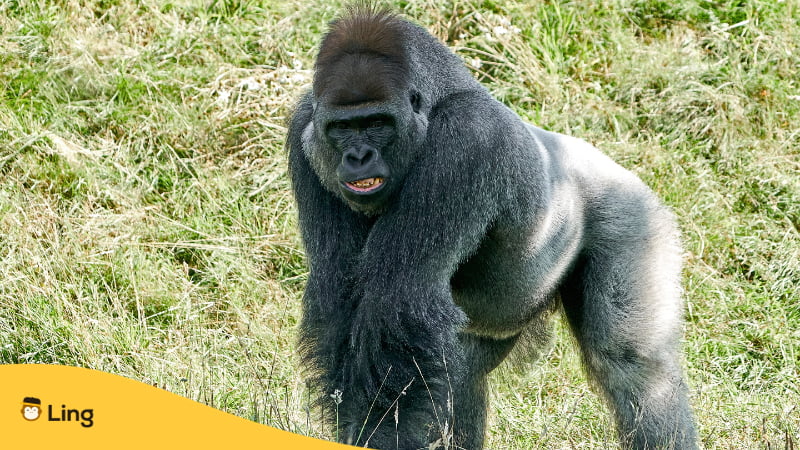
“What is the slowest animal?”
Answer:
ก็ลีลา
(gɔ̂ɔ lii laa)
“Well, it’s slow”
ก็ลีลา (gɔ̂ɔ lii laa) is a play of the word กอริลล่า (gɔɔ rin lâa) , which is a Gorilla in English.
- ก็ (gɔ̂ɔ) means so, then, or well—used as a filler word for comedic effect.
- ลีลา (lii laa) means graceful movement, rhythm, or slow, drawn-out motion—often used metaphorically to refer to someone who is slow or takes too long.
11. สัตว์อะไรเป็นระเบียบ (Sàt À Rai Bpen Rá Bìap)
Question:
สัตว์อะไรเป็นระเบียบ
(sàt à rai bpen rá bìap)
“What kind of animal is tidy?”
Answer:
เรียงผ้า
(riang pâa)
“folding laundry”
เรียงผ้า (riang pâa) is a play on the word เลียงผา (liang pǎa) which means ‘mountain goat’ in English.
- เรียง (riang) means to arrange, to line up, or put in order.
- ผ้า (pâa) means fabric, cloth, or laundry.
- เลียงผา (liang pǎa) refers to a serow or mountain goat, an actual animal in Thai.
So เรียงผ้า implies someone tidily folding or organizing laundry, making it a pun on being neat.
Tips: Many Thai jokes rely on tone and alphabet play, as Thai is a tonal language with characters that produce similar but distinct sounds.
How Thais Use Humor To Navigate Hierarchy
Thai society is organized around a concept called kreng jai (เกรงใจ), a deep social awareness and reluctance to cause discomfort or impose on others. There’s also a clear hierarchy based on age, seniority, social status, and the concept of bunkhun (บุญคุณ), accumulated social debt to those who’ve helped you.
In this context, humor becomes a sophisticated social tool, not just entertainment.
Who gets to make jokes (and at whom):
In Thai social settings, teasing flows downward or laterally more comfortably than upward. A boss can tease employees; a younger person teasing an older person requires a much longer-established friendship and significant mutual trust. New acquaintances, especially foreign ones, are almost always safest with self-deprecating humor aimed at themselves.
The “laugh even if you don’t get it” rule:
When a Thai person makes a joke and laughs, even if you have no idea what just happened, the culturally correct response is to smile and laugh along. Asking “what does that mean?” in the middle of someone’s punchline disrupts the sanuk flow. Save the question for after the laughter has subsided. This is why many long-term expats in Thailand say they spent months laughing at jokes they didn’t understand, slowly assembling the pattern from context.
Humor as a face-saving tool:
Thailand has a strong concept of face (หน้า — nâa). When someone makes a mistake, drops something, mispronounces a word badly, gets lost, a well-timed self-deprecating joke allows everyone to acknowledge the awkward moment without assigning embarrassment. This is why Thais are often delighted when a foreigner mispronounces Thai and then laughs about it. You’ve shown you understand the face-saving function of humor. That’s culturally intelligent.
Tourist humor vs. local humor:
This distinction matters. Tourist-zone humor (around Khaosan Road, beach towns, night markets with a lot of foreign visitors) often centers on “Thai-English” misunderstandings, gently poking fun at foreigner confusion, it’s designed to be accessible and is generally harmless.
Local humor, the muk jokes, the province puns, the food-name wordplay in this article — requires cultural insider knowledge to decode and is never performed for visitors. When a Thai person shares local-style humor with you, it’s a genuine sign of inclusion. You’ve been let into the real room.
Tips: How to Make Your Thai Partner Laugh With Your Thai Joke
1. Learn And Play With Sound-Alike Words.
Pay attention to how different tones or similar-sounding Thai words can mean totally different things (like “mai” in five Thai tones).
Practice switching between minimal pairs—words that differ only slightly in tone or consonant.
This shows you’re not just learning the language—you’re learning how Thai people play with it.
It signals care, curiosity, and effort.
2. Use Intentional “Mistakes” To Create Surprise
When you’re chatting and a keyword comes up (like “soap” or “train”), try replacing it with a funny-sounding Thai homophones. For example, mix up “ฉก” (bite) and “สก” (dirty).
These light mix-ups, especially in the right moment, can create playful and spontaneous humor that feels deeply Thai.
3. Embrace the silliness—logic isn’t required.
Thai jokes often value rhythm, wordplay, and absurdity over punchline logic.
Thai people love พูดไปเรื่อย ๆ (pûut bpai rûueai rûueai) — rambling with no real endpoint just for laughs.
Don’t overthink whether it makes sense; instead, admire and join in on the unstructured fun.
It’s an invitation to show you’re relaxed, open-hearted, and willing to laugh at yourself.
4. Respond with laughter, even if you don’t fully get it—yet.
When your Thai partner cracks a joke that feels silly, random, or completely different from what you’re used to—laugh anyway.
Thai jokes often break the rules of logic or structure common in Western jokes.
By choosing to engage with the moment, not just the meaning, you’re showing love and cultural openness.
Ask them to explain it, and over time, you’ll begin to understand the rhythm and charm behind Thai jokes.
Sooner or later, you’ll find yourself genuinely laughing—not just to connect, but because it truly becomes funny to you too.
Common Mistakes Foreigners Make With Thai Humor
These mistakes are very common, and very fixable once you know what to watch for.
Mistake #1: Translating your English jokes directly into Thai
Why it fails: English humor often relies on irony, sarcasm, or cultural references that don’t translate. “That’s so funny I forgot to laugh” will confuse and possibly offend — sarcasm is not a dominant mode in Thai humor.
What to do instead: Start with the joke formats in this article (question-answer wordplay). These are the formats Thais already find funny, and you’re working within a pattern they recognize.
Mistake #2: Making jokes about physical appearance too early
Why it fails: Thai people do make appearance-based jokes — nicknames like “Dum” (dark-skinned), “Moo” (chubby), or “Lek” (small) are affectionate, long-established Thai nicknames used within close relationships. But a foreigner attempting these jokes early comes across as rude, not playful.
What to do instead: Wait until you have a genuinely close relationship. If a Thai friend uses a self-deprecating nickname for themselves, you can gently echo it — but never introduce this type of humor yourself.
Mistake #3: Explaining the joke
Why it fails: In Thai humor culture, the follow-up explanation kills the sanuk. The laughter is the point — not the analysis.
What to do instead: Deliver the punchline, laugh, and move on. If someone didn’t get it, let it go. Try again with a different joke.
Mistake #4: Laughing at the wrong things
Why it fails: A foreigner laughing loudly at a Buddhist monk, at a royal reference, or at someone visibly embarrassed signals cultural illiteracy — and can create social distance instantly.
What to do instead: When unsure whether something is “safe to laugh at,” follow the Thai people in the room. If they’re not laughing, neither should you.
Mistake #5: Attempting Northern or Isan dialect jokes without knowing the dialect
Why it fails: The phonetics are genuinely different. A Central Thai joke mispronounced through a Kham Mueang frame just sounds wrong.
What to do instead: Stick to Central Thai joke formats until you have genuine exposure to and knowledge of regional dialects.
Related Vocabulary About Thai Jokes
If you want to make your Thai partner or their family laugh, start by picking up a few essential words from Thai jokes.
This vocabulary table will help you understand and use basic Thai words related to jokes, humor, and playful expressions.
Whether you’re learning how to say “just kidding” in a casual conversation or trying to describe a “pun” in Thai, these terms will bring you one step closer to connecting more deeply—and laughing more often—with your Thai loved ones.
| English | Thai | Pronunciation | Sound |
|---|---|---|---|
| Joke (n.) | เรื่องตลก | rʉ̂ang dtà lòk | |
| Joke (v.) | พูดตลก | pûut dtà lòk | |
| Joker | ตัวตลก | dtua dtà lòk | |
| Joke about/Just kidding | ล้อเล่น | lɔ́ɔ lên | |
| Humor | ขำขัน | kǎm kǎn | |
| A pun/Gag | มุกตลก | múk dtlòk | |
| Have no sense of humor | ไม่มีอารมณ์ขัน | mâi mii aa rom kǎn |
How Do You Say “Jokes” In Thai?
In Thai, the word commonly used for jokes—especially puns or wordplay—is มุก (múk) , and you’ll often hear people say เล่นมุก (lêen múk) which means “to make jokes/ puns”.
These aren’t always logical in the Western sense, but they’re loved for their playful twists on tones and sounds.
When you start understanding and using Thai jokes “múk,” it shows your partner and their family that you appreciate their humor and aren’t afraid to join in the fun—even if it’s a little silly.
With Ling, you can learn these expressions naturally and use them with confidence, helping you not only share laughs but also build emotional closeness and earn a place in your partner’s world.

Frequently Asked Questions About Thai Jokes
What Is The Thai Word For Fun?
The Thai word for “fun” is สนุก (sà-nùk), and it goes far beyond just having a good time—it’s a cultural concept rooted in enjoying life with others. Thai people value sà-nùk in nearly every interaction, and being able to say or respond to this word naturally shows you’re engaging on an emotional level. If your Thai partner’s family sees you understanding and using expressions like “sà-nùk,” they’ll recognize your openness and genuine effort to belong.
What Does 555 Mean In Thai?
In Thai, “555” is how you laugh online in Thai. It’s the online equivalent of “LOL”—and it’s not random. The number 5 in Thai is pronounced “hâa,” so writing “555” sounds like “hâa hâa hâa,” or laughter! Understanding small but meaningful things like this makes your Thai partner feel seen and understood—and when their friends or family text you “555” and you get the joke, they’ll know you’re in on it.
Who Are Some Famous Thai Comedians?
Thailand has a rich comedy scene with beloved comedians like Note Udom, Teng Terdterng, and Nong Cha Cha Cha—figures known not only for their humor but also their ability to reflect Thai society and everyday quirks in a playful way. Sharing a laugh over one of these comedians with your Thai partner’s family is a great way to bond and show interest in what they find funny.
Bringing It All Together: Thai Jokes, Love, And What Really Makes Thai People Laugh
Thai humor isn’t really about punchlines. It’s about สนุก, the shared commitment to finding lightness together. Understanding the jokes in this article is one layer. Understanding that they exist within a culture shaped by hierarchy, face-saving, and regional identity is what turns linguistic knowledge into genuine connection.
The province puns, the gorilla joke, the train wordplay, these are the same jokes Thai children grow up hearing. When you deliver them (even badly), you’re not showing off language skills. You’re showing that you’ve paid attention to what makes Thai people laugh, and that you want to join in. And remember that warmth, in Thailand, is everything.
PS: do you remember how to laugh online in Thai? Just type 555!
Take Your Thai From Phrases To Real Conversations
Learning Thai jokes is the fun part. Building the foundation that makes them land — tones, vocabulary, everyday phrases — is what the Ling app is built for. With 200+ lessons, native speaker audio, and bite-sized practice that fits into your day, you can move from knowing what a joke means to actually making people laugh.
If you’re learning Thai to connect with loved ones, settle into daily life, or simply go deeper into one of Southeast Asia’s most culturally rich languages, learn Thai with the Ling app and start practicing today.